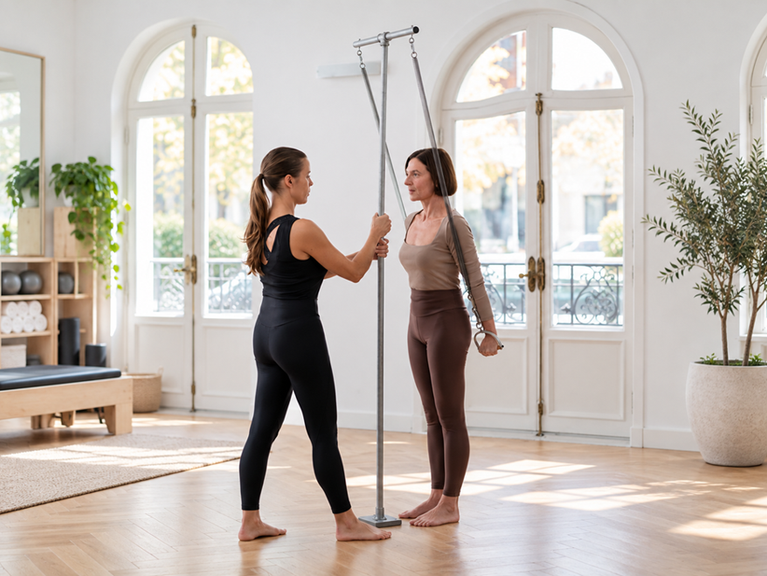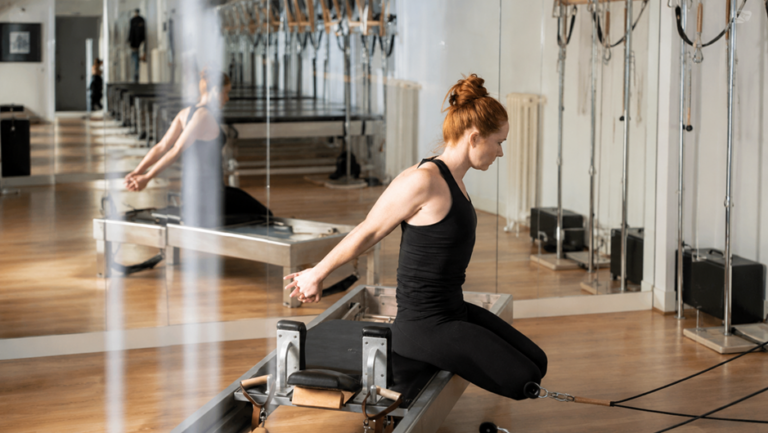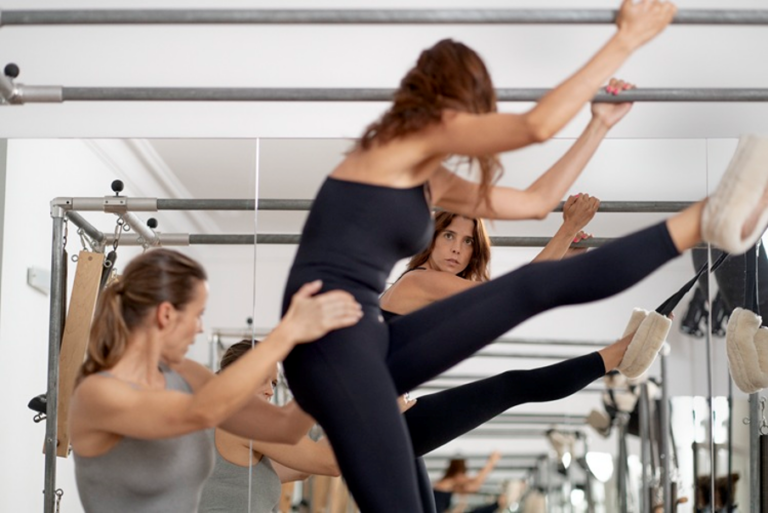
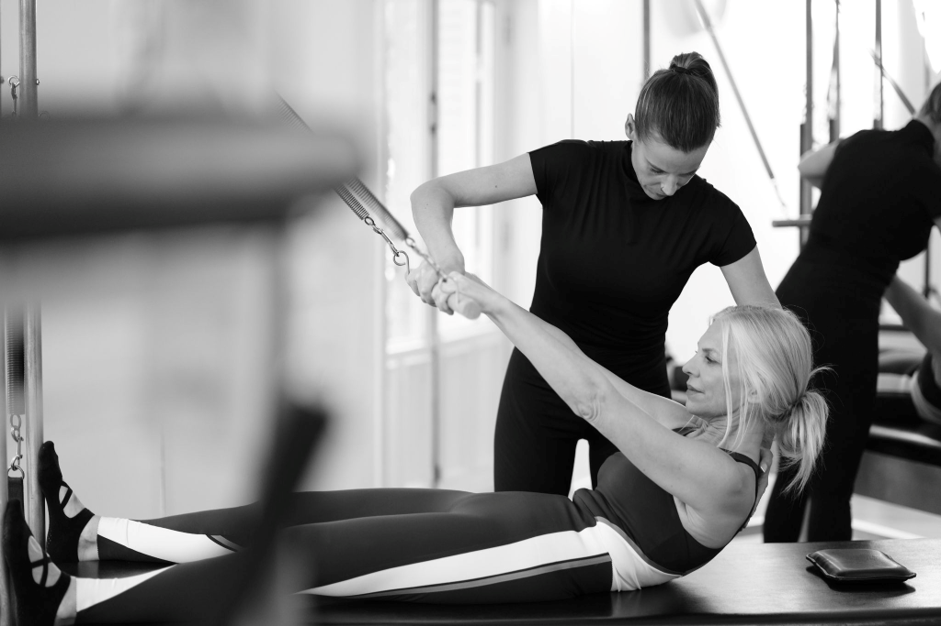
Combine Original Pilates with other sports it can be an excellent way to improve physical performance, gain mobility and strengthen the body without needing to train for more hours or accumulate fatigue. The idea is not to train more, but to find a good balance between the various activities to make the most of their benefits without overloading the body.
The Original Pilates it fits very well as a supplement to sports like running, cycling, padel, swimming or strength training, provided it is combined in a balanced way and giving the body the necessary time to recover.
Why combine Original Pilates with other sports?
Each sports discipline demands different things from the body. Some sports require repetitive movements, others involve frequent impacts, and others demand high levels of strength, speed or endurance.
The Original Pilates method It introduces a workout based on control, precision and quality of movement, meaning it can help to offset certain demands arising from other sports activities.
Among their main contributions are:
- Core strengthening and of the stabilising musculature.
- Improvement of the mobility and bodily control.
- Work by the posture alignment.
- Greater awareness on the execution of each movement.
- Development of a more balanced body and prepared for different types of exertion.
Therefore, Pilates does not have to replace your usual sport. It can become a complement within a more comprehensive training plan.
How to combine different workouts without overloading the body
When someone enjoys playing sport, it’s easy to fall into the trap of thinking that the more they train, the better their results will be.
However, the body needs stimulation, but it also needs recovery.
Piling up intense sessions of strength training, running, cycling or any other discipline without allowing for rest can lead to a constant feeling of tiredness and gradually reduce the quality of your training.
For this reason, before introduce Pilates into a fitness routine It is worth analysing three aspects:
- The current training frequency.
- The intensity of each discipline.
- The goal we want to achieve.
The aim shouldn't be to fill every day of the week with physical activity, but to distribute the workouts intelligently.
How to adapt Original Pilates to the sport you practise
Not all sports place the same demands on the body. For this reason, the way Pilates is incorporated should be tailored to each discipline.
Original Pilates and running
Running involves thousands of repeated impacts during a session. Furthermore, it requires a good core stabilisation capacity to maintain an efficient technique.
The Pilates for runners You can complement your training by focusing on stability, hip mobility, core control and the deep muscles.
A good strategy might be to schedule Pilates sessions on days when you have a light run, or on days separate from your more demanding training sessions.
The aim is to add quality to the training, not to arrive fatigued at the next running session.
Original Pilates and strength training
Weight training generally aims to improve strength and build muscle using external loads.
Pilates can offer a different approach, focusing on the movement control, stability and coordination.
This combination may prove particularly useful for working on areas that do not always receive as much attention during a conventional gym routine.
In this case, it is best to avoid doing a particularly demanding Pilates session immediately after an intense strength training session if the same muscle groups are already fatigued.
Original Pilates and cycling
The cycling involves maintaining a relatively stable position for quite a long time and continually repeating the same movement pattern.
The Pilates for cyclists it can help to introduce different movements, work on spinal mobility and strengthen the muscles involved in stability of the pelvis and trunk.
A well-planned session can become an excellent complement during lower-intensity days on the bike.
Original Pilates and padel or tennis
The racket sports they combine rapid displacements, changes of direction, braking and rotational movements.
In addition, there is a significant asymmetry component because a large portion of the strokes are performed predominantly from one side.
Pilates allows you to work the stability, the mobility and the trunk rotation control, seeking a more balanced body work.
Therefore, it can be especially interesting as a complement within a weekly padel or tennis routine.
Original Pilates and swimming
The swimming It already entails a very comprehensive workout, but it also requires good coordination between the torso, shoulder girdle and pelvis.
Combine Pilates and swimming It can help develop greater body control and work the stabilising muscles out of the water.
In both cases, the technical quality of the movement is of great importance, meaning they can complement each other particularly well.
How many days a week is it best to do Original Pilates?
There is no universal frequency. It will depend on the sport you play, your fitness level, your goals and the number of training sessions you already do each week.
A person who trains twice a week may have more scope for introducing Pilates than someone who does five demanding sports sessions.
The important thing is to look out for signs such as:
- Cumulative fatigue.
- Constant feeling of heavy legs or muscles.
- Decrease in performance.
- Lack of recovery between sessions.
- Loss of quality in exercise execution.
If they appear repeatedly, it is probably necessary to review the total training load.
How to organise a balanced training week
The layout must be individually tailored, but there are some principles that can help.
Avoid putting all the higher-intensity workouts on consecutive days. Alternating stimuli allows certain structures more time to recover.
It can also be useful to set aside a day to full rest or light activity.
For example, a week might combine a main sport, Pilates and recovery in this way:
- Two or three sessions of your usual sport.
- One or two Original Pilates sessions.
- One or several days of recovery or light activity.
It is not a matter of following a rigid formula, but rather of find a balance between training and rest.
Original Pilates doesn't have to be just another workout
One of the keys to integrating Pilates properly is to stop seeing it simply as an additional activity that has to be squeezed into the diary.
The value of the method lies in how the body is worked.
Control, concentration, precision, breathing and coordination are part of a practice that seeks to improve the quality of movement.
For this reason, Pilates can help to complement other disciplines without the need to turn every session into a maximum intensity workout.
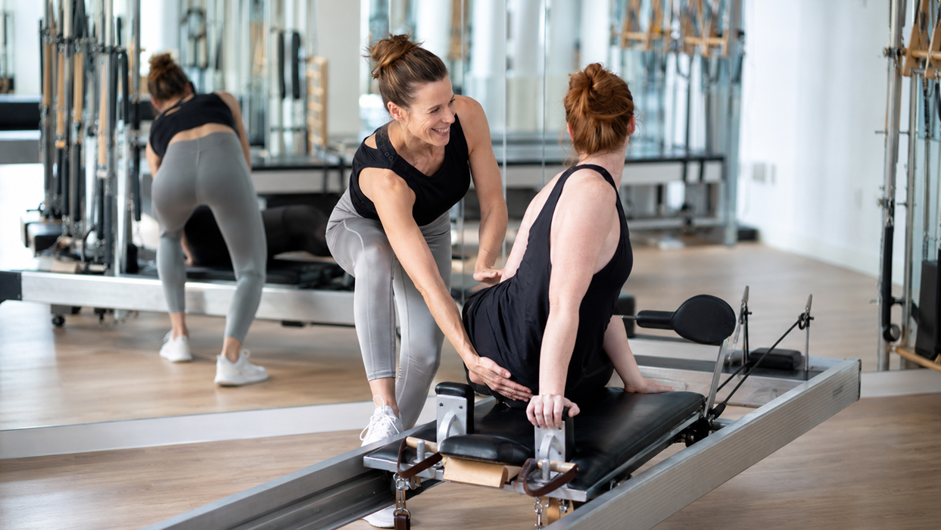
Find the balance between performance and recovery
Combine Original Pilates with other sports can help you to develop a more balanced, strong and mindful body, provided there is proper planning.
The key is to respect recovery, adapt your training frequency and understand what each discipline brings to your routine.
At Elite Pilates Madrid We work with the Original Pilates method from a personalised approach, taking into account each person's physical level, needs and sporting activity.
Do you practise another sport and want to know how to integrate Original Pilates into your routine? If you are looking for reformer Pilates in Madrid, at Elite Pilates We can tailor the sessions to your level, sports activity and goals. Enquire about our method to find out how we can tailor the sessions to your goals.
Tell us what you thought of this article, please rate it (1 TO 5 STARS).