
On the right foot
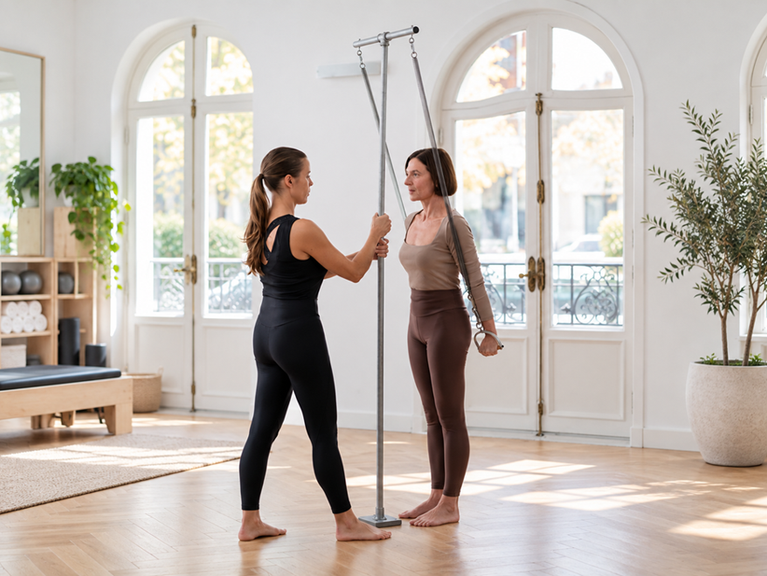
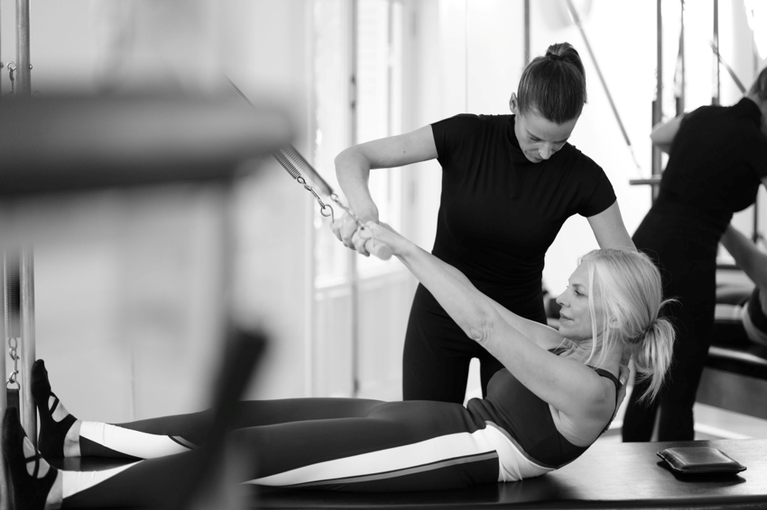
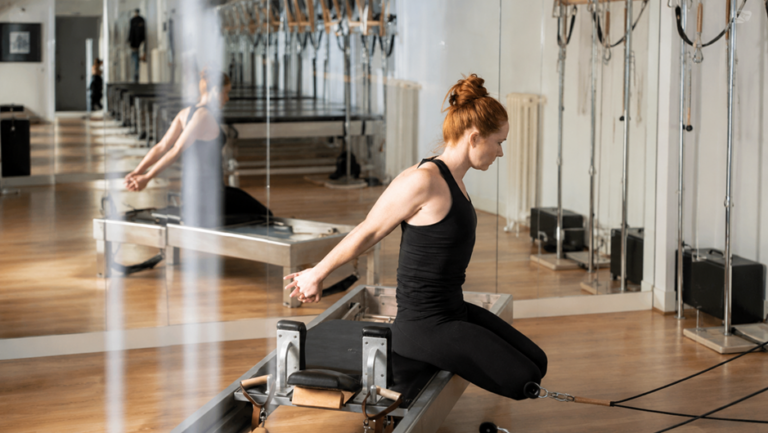
This week we show you how Pilates promotes its functionality. The foot is one of the structures that most influences the rest of the functions of the human body. It supports all the weight and distributes its load, both statically and dynamically, allowing locomotion, propelling the body and adapting it to the ground by absorbing and cushioning its impact. The foot is designed to function barefoot. For this reason, it becomes a very complex structure that is sometimes weak and unstable due to the continuous use of footwear. It is necessary to work on strengthening, flexibility and proprioception in order to train it. In the Pilates method, we work with bare feet, focusing on their support and correct alignment, preserving their arches and plantar vault. With its practice, the feet acquire strength, control and dexterity. Working on the position of the foot, its action, support and movement is fundamental and insisting on its correct support in the different exercises allows us to correctly transmit the forces and loads to the ground. This helps to balance the muscle chains and improve the mechanical imbalances and imbalances that may affect the ankle, toes and even the knee and hip. A good base of support provides balance and body control and prevents injuries. The ideal Pilates class begins with a footwork on the reformer where we work on the foot supports and also activate specific pressure points, by reflex stimulation, which have to do with the regulation of some viscera such as the heart, liver or kidneys. Then the whole exercise programme is developed with different positions, different apparatus and different resistances so that the work of the feet is always functional. In this way, the musculature that reaches from the energy centre to the entire leg is lengthened while the joints are strengthened and stabilised. This affects the functionality of the ankle by controlling its flexion and extension, and even the mobility and strength of the toes. This way of working guarantees a strong, powerful and elastic musculature that will be reflected in a symmetrical and balanced posture. There is also specific equipment designed for the correction of the foot and toes such as the foot corrector and toe exerciser, The project is a great challenge to further deepen their work.
Tell us what you thought of this article, please rate it (1 TO 5 STARS).