
What is the pelvic floor?
The pelvic floor is a complex and vital group of muscles located in the lower part of the abdominal cavity, extending from the pubic bone at the front to the base of the spine at the back. These muscles play a vital role in the proper functioning of the human body, supporting the pelvic and abdominal organs, such as the bladder, bowel and, in women, the uterus.
Main functions of the pelvic floor
The main functions of the pelvic floor include contributing to sexual health, bladder and bowel control, support during pregnancy and childbirth, and aiding pelvic stability and body posture. This set of muscles acts as a kind of hammock that supports the internal organs, ensuring they stay in place and function properly.
It is important to note that the pelvic floor does not work in isolation, but in conjunction with other muscle groups and body systems. A weak or injured pelvic floor can lead to a variety of problems, such as incontinence, prolapse and pelvic pain. In contrast, a strong and well-toned pelvic floor contributes to better overall health, better sphincter control, and improved sexual function.
Pelvic floor training, such as Kegel exercises or pelvic floor exercises, can be used to Pilates method, can strengthen these muscles, thereby improving their functionality and preventing or mitigating associated problems. It is important to consult a health professional before beginning any training regime, especially if pelvic floor related problems already exist, to ensure a safe and effective approach tailored to individual needs.
In summary, the pelvic floor is an essential muscular structure that plays a critical role in many vital body functions, and its care and strengthening are key to maintaining good health and quality of life.
What is pelvic floor Pilates?
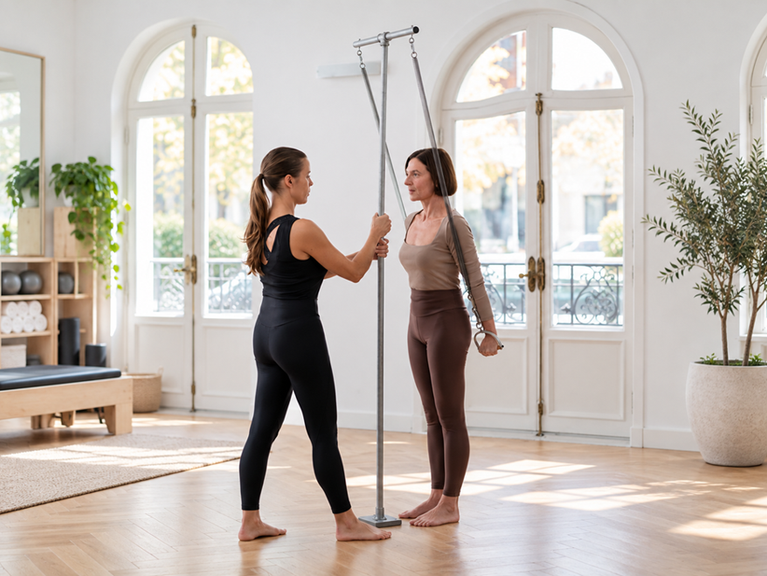
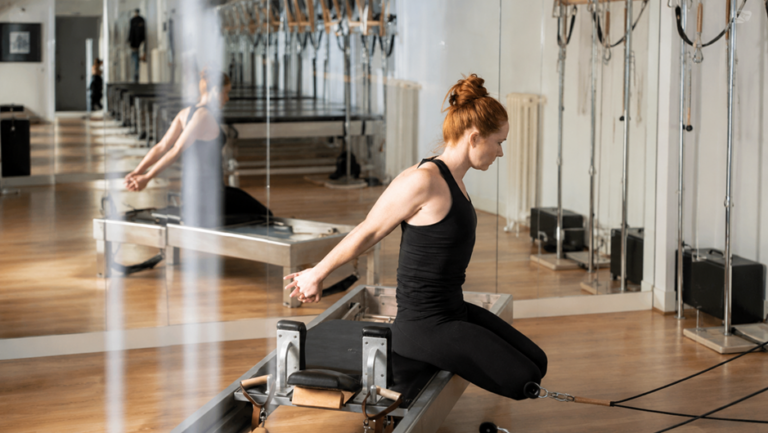
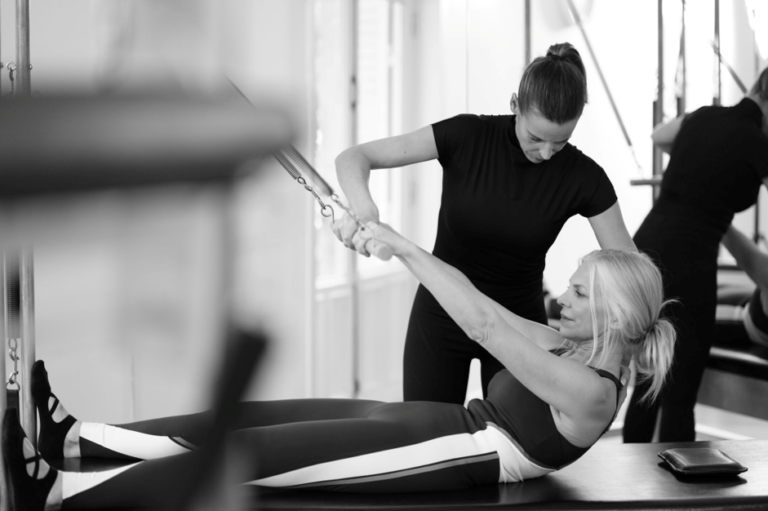
Pelvic floor Pilates is a specialisation of the Pilates method, focusing specifically on strengthening and improving the function of the pelvic floor muscles. This form of Pilates is particularly beneficial for those seeking to improve their pelvic health, whether for postpartum recovery, to treat or prevent urinary incontinence, or to strengthen the pelvic area in general.
In pelvic floor Pilates, work focuses on the activation, strengthening and control of the pelvic muscles. The exercises are designed to teach practitioners how to effectively contract and relax these muscles, thus improving their tone and function. In addition, this type of Pilates helps to develop greater knowledge and body awareness in the pelvic region, which is essential for the management and prevention of various conditions.
A key feature of pelvic floor Pilates is the integration of conscious breathing and body alignment into the exercises. These elements are essential to ensure that abdominal pressure is managed correctly during the movements, thus avoiding hyperpressure on the pelvic floor. Correct alignment and breathing contribute to a more effective activation of the pelvic and abdominal musculature, resulting in a safer and more beneficial workout.
Pelvic floor Pilates is suitable for people of all ages and fitness levels, including postpartum women and people recovering from pelvic surgery or injury. Because the exercises can be adapted to meet different skill levels and specific needs, it is an accessible method for improving pelvic floor health.
Pathologies in which the Pilates method can help us
- Genital prolapse: As we have already mentioned, by improving our posture we can eliminate the pressure on the pelvic floor that makes these pathologies worse.
- Urinary incontinence: If our pelvic muscles are competent we can help prevent and reduce the risk of pelvic floor dysfunction.
Benefits of Pilates in pelvic floor treatment
- Strengthens the energy centreThe abdominal cavity must manage pressure well (coughing, sneezing, laughing, lifting weights...), which requires the correct tone of the surrounding structures, diaphragm, abdominal girdle, lumbar and pelvic floor. Therefore, by strengthening the energy centre and improving its functioning, we can prevent pelvic disorders.
- Work on alignmentPilates method works on the alignment of the body, in this way we will be doing the exercises in a correct and safe way so as not to exert hyper pressure on the pelvic floor which could later cause pathologies.
- Conscious breathingIf we have a good breathing pattern we can keep our abdominal viscera supported. In addition, by consciously breathing we work the Transversus abdominis, one of the main muscles that works together with the pelvic floor.
- Pelvic stability and postureInstability can lead to uncontrolled movement in the structures, such as hypermobility in the urethra causing urine leakage. Poor pelvic support can also lead to pelvic floor contractures and pain. The work carried out using the Pilates method directly addresses these problems, as on the one hand, it focuses on actively working on posture. On the other hand, by working on the energy centre, it strengthens all the muscles surrounding the pelvis, as this is one of its parts together with the abdominal muscles and the muscles of the lower back.
Advice
Our recommendation for any pelvic floor dysfunction is that you should always visit a professional before any type of training, as it is important to make an individualised assessment and to establish a treatment plan tailored to the individual.
Tell us what you thought of this article, please rate it (1 TO 5 STARS).