What is Therapeutic Pilates?
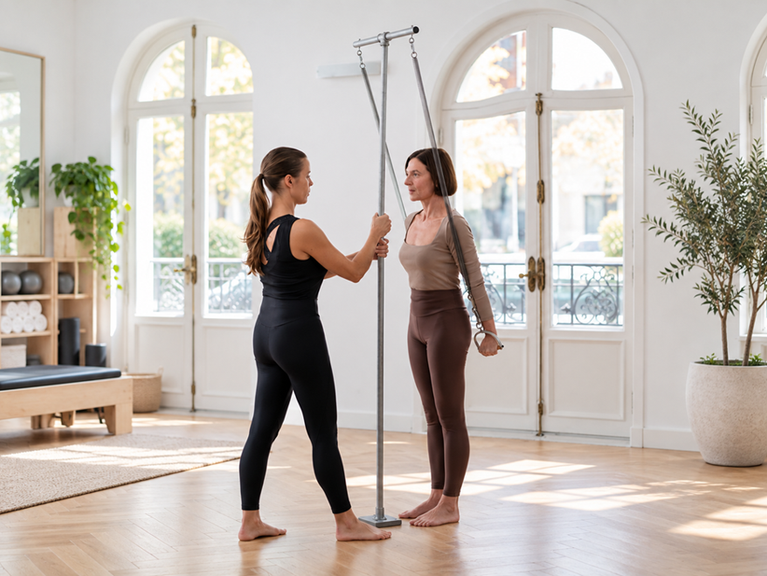
Therapeutic Pilates is an adaptation of the popular Pilates method, designed specifically for physical rehabilitation and the improvement of general wellbeing. This form of Pilates focuses on the use of gentle, controlled movements to strengthen the core musculature of the body, improve posture and increase flexibility. Unlike traditional Pilates, the therapeutic approach is more geared towards individuals recovering from injury, suffering from chronic pain or looking for a method of exercise that is gentle but effective for their specific condition.
It uses modified exercises tailored to meet the individual needs of each person. These exercises are designed to work in harmony with breathing and concentration, which not only benefits the body, but also the mind. By focusing on strengthening the deep musculature, especially around the abdomen, lower back and hips, this method helps to stabilise and align the body, resulting in better posture and reduced risk of injury.
In addition, Therapeutic Pilates is noted for its ability to adapt to a wide range of conditions and needs, from recovery from sports injuries to the management of chronic conditions such as arthritis and osteoporosis. With the guidance of a qualified instructor, practitioners can experience improved mobility, flexibility, strength and body control, leading to a better quality of life and overall well-being.
What are the benefits?
The Pilates, As well as being one of the most complete training systems for maintaining physical and mental fitness, we say that it is therapeutic because it is also one of the most efficient methods for rehabilitating injuries and improving episodes of pain for different reasons, whether due to trauma, surgery, postural decompensation, physical inactivity, sports injuries or long hours of work doing repetitive gestures, etc. In addition, the result of constant training helps us to prevent new injuries and increase general health.
1. Muscle strengthening and body toning
The Pilates method works the strength of your body as efficiently as any other functional or high intensity training, with very demanding exercises and also in a balanced way, without the risk of injury. It combines a great variety of exercises, either with our own body or with specific apparatus with resistances and springs, in which we work on the tone and strength of the whole body starting from the most important focus, which is the energy centre or “powerhouse”. Based on the strength of this centre, our body will be trained in a global and functional way. In this way we manage to strengthen the internal musculature, which will give us stability in the joints and will allow us to guarantee safety in the function and strength of the external musculature, seeking the balance that makes the muscle chains work in a healthy and safe way.
2. Improving posture and body alignment
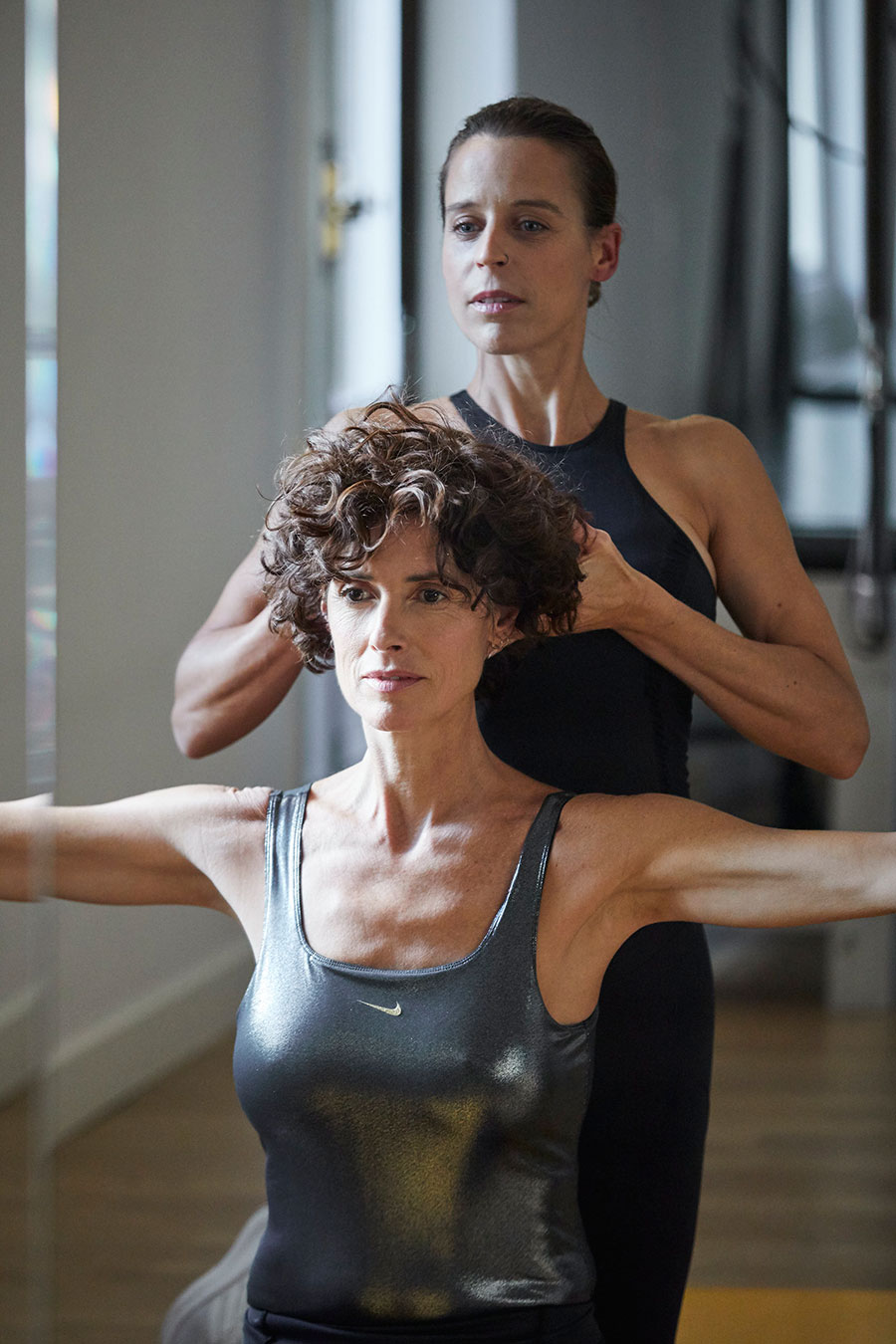
Pilates helps to become aware of and control posture, aligning the body, correcting muscular and joint imbalances and avoiding possible injuries, increasing our physical and mental wellbeing. Its constant practice makes the body begin to automatically resort to an effective posture, achieving faster the activation of the muscles that allow us to maintain this correct body alignment. It ensures a much more effective and safe movement in any activity that we are developing in our day to day without injury, thanks to the strength of our internal muscles that maintains the posture and makes us control all our movements.
3. Injury prevention and rehabilitation
For the majority of ailments or injuries, the most suitable treatment is movement as exercise, in a healthy and safe way. That is why the Pilates method is considered one of the most suitable disciplines to improve most pathologies.
We manage to re-establish body function, seeking balance between muscle chains and correcting decompensations.
It becomes a main tool to recover injuries and improve the general condition in pathologies:
- Traumatological: sprains, tendinopathies, herniated discs, discopathies, cervical pain, lumbago.
- Deformities of the spine: scoliosis, hyperkyphosis
- Degenerative diseases such as osteoarthritis, arthritis or osteoporosis.
- Vascular pathologies; respiratory
- Of chronic pain such as fibromyalgia, polyarticular pain, etc.
- Neurological such as multiple sclerosis or hemiparesis.
At the same time, the Pilates method helps us to prevent the appearance of new pathologies or the bad evolution of existing ones. With constant and continuous training, we can make the body perform its daily functions efficiently. We will move better with much less effort, which will help us to avoid injuries.
4. Reduced stress and improved relaxation
The Pilates method, by making us work at a high level of concentration, in coordination with good breathing control, helps us to reduce stress levels and reduces tension, which will allow us to fall asleep and sleep better.
It also boosts energy levels and the immune system, providing vitality, mental strength, confidence and self-confidence.
On the other hand, the practice of Pilates often becomes a choice to escape from a sedentary lifestyle and to start moving, changing our physical state and the beliefs we have about ourselves, thus reinforcing our self-esteem.
5. Increased flexibility and joint mobility
At the same time as we work on flexibility we are working on strength and muscle elongation. The Pilates method gives us many of the keys to work on this objective. At the beginning of starting to practice the method, we can find ourselves with a very shortened musculature caused by muscular tensions, motor weaknesses, pain, postural deviations.
A shortened muscle is a weak and slow muscle. The more elastic a muscle is, the more contraction capacity it will have and the more its fibres will be able to reach higher speed and power to do so. At the same time, elasticity will make our joints gain more amplitude.
With the Pilates method, the whole body is exercised globally by making the muscle chains act in a coordinated way, but at the same time, monitoring how each joint is working separately in a stable and safe way.
The work with the different Pilates apparatus will help in the execution of the exercises and to feel the body much more. Flexibility will be gained in this way, always in a dynamic way and leaving aside static stretches, holding the position for a long period of time which, in order to gain time, are done more and more quickly and end up being insufficient.
Fundamental principles of Therapeutic Pilates
1. Centre
We call the area comprising the deep abdominal, lumbar and hip muscles, which work synergistically and are the motor from which all body movements must start, the «Powerhouse». The exercises of the method are focused, among other things, on strengthening this part of the body.
2. Concentration
It is the principle that makes us work on body awareness in order to connect the mind with the body. Concentration makes us be aware at all times of each part of the body, of its movement and function in each exercise, and of the coordination with the breathing and with the rest of the areas that remain stable.
3. Control
Having control over our body makes us flee from bad habits, postures or unwanted movement patterns. Without this control, our body will tend to use its strongest muscles and can continue to strengthen them, but it will forget about the weaker ones, which will remain weak if we do not concentrate on them to feel them and change them.
When we master a movement with proper control, it gives us efficiency in its execution, improving performance. The muscular control that is acquired will be reflected beneficially in the activities of daily life avoiding pain or injuries.
4. Accuracy
In order to achieve a precise movement we first need to achieve a correct stabilisation of the joints through the deep musculature, and thus achieve a good execution and efficiency in the technique of the movement. This will be thanks to the development of body awareness and concentration, necessary to achieve perfect control.
5. Breathing
Good breathing helps to control movements and facilitates stabilisation and mobilisation of the spine and limbs. It is also a link between body and mind. It helps us to concentrate on our body and the activation of the energy centre, coordinating it with strength and movement.
Breathing correctly will allow us to move fluidly, without blockages. It prevents us from forced postures, visceral compressions or back pain due to stiffness in the rib cage.
6. Fluency
It is essential to perform the exercises correctly. Following a natural, smooth and continuous rhythm helps to combat stiffness and avoids the risk of muscle pain or joint injuries. In Pilates all movement is functional and global, there are no isolated, static or abrupt movements that may interfere with the execution of the exercises.
Tips for safe Pilates practice
Assessment with a qualified professional
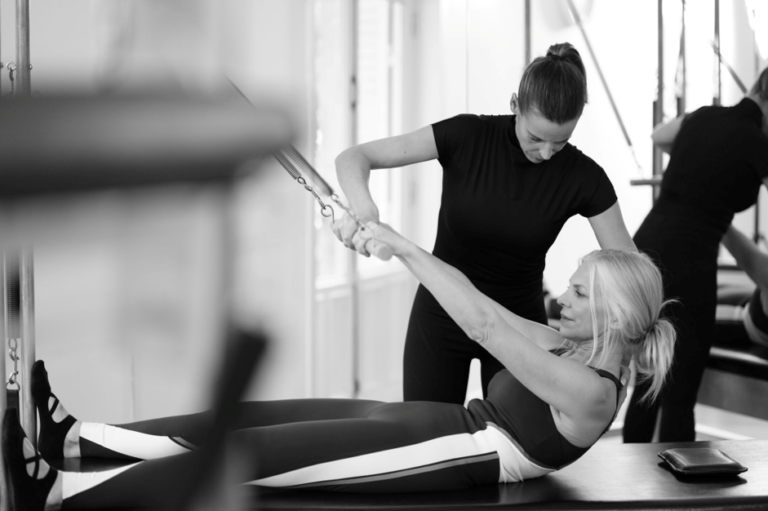
When we use a discipline such as the Pilates method therapeutically, we must bear in mind that it is always carried out on an individual basis. This is necessary, as each person will have a particular set of ailments or injuries and will have to be treated and supervised in a personalised way, attending to their needs.
A professional certified with Romana's Pilates, the original method, will have the necessary and adequate knowledge to be a Pilates teacher. An added value, moreover, is to find professionals of the method who also have clinical knowledge, such as physiotherapists.
Use appropriate and safe equipment
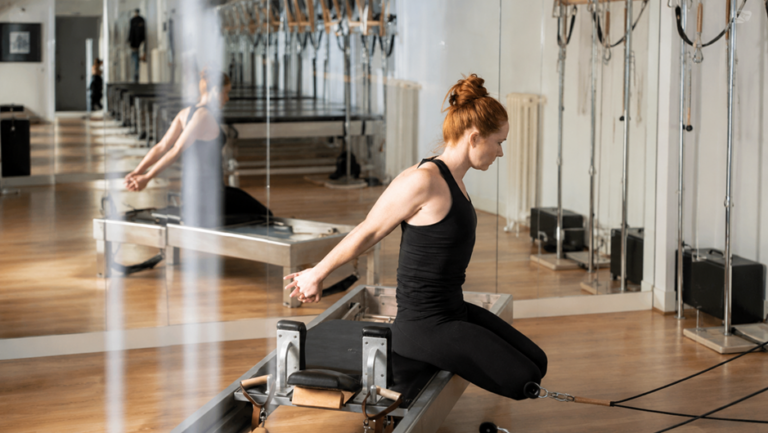
It is important to keep in mind that for the work to be complete and to achieve real effectiveness during the sessions, it is necessary to work with both the mat and the different apparatus. A true Pilates session should combine both, with the teacher always stipulating the most appropriate exercises in each case.
Here we would also like to point out that not all devices are the same. There are many brands on the market, but almost none of them respects the original resistances and measurements designed by Joseph Pilates. This often reduces the effectiveness, as the devices were created to help us find the correct musculature, align the body and gain flexibility.
Tell us what you thought of this article, please rate it (1 TO 5 STARS).