What is Pilates?
The Pilates is a discipline of physical and mental training, created by Joseph Hubertus Pilates based on the knowledge of other disciplines such as martial arts, yoga or dance. Being a great student of the human body and its functioning, he designed an exercise programme that he christened “Contrology”. It is based on 6 fundamental principles:
- Energy centreThis is the motor from which the strength to the rest of the body comes from. It comprises the area between the lower ribs and the lower part of the hips, like a girdle that surrounds the abdominal, lumbar and gluteal area.
- ConcentrationNecessary to become aware of the body and maintain control of it, coordinating movement with breathing. The mind becomes aware of its capacities, limitations and weaknesses in order to improve its state.
- ControlNothing happens randomly or haphazardly, but all movement is controlled.
- AccuracyThe exercises must seek perfection in the correct execution, giving quality of movement and achieving the proposed objective.
- FluencyCarrying out the exercises in a harmonious and natural way, without sudden movements or impacts that disturb the function.
- BreathingBy making the air enter and exit naturally and deeply through the nose and taking it to the intercostal area to fill the lungs with air, increasing their capacity and also favouring blood circulation.
Benefits of Pilates
- Increase in body awareness
- Increases the attention span and mind control.
- Improves body posture, The new system is designed to realign and readjust structural decompensations, thus improving postural hygiene during daily activities.
- Strengthens the energy centre and with it the rest of the musculature.
- It works joint stability by strengthening the internal musculature.
- Great mobility work of the spinal column in all its planes and actions and strengthening of its musculature.
- Increased flexibility of the whole body as a whole.
- Improves the balance and coordination.
- Improves the fluidity and efficiency of walking.
- Improves the breathing and blood circulation.
- It helps to achieve BEST REST.
- It helps to combating stress and anxiety and increases self-esteem.
- It works injury rehabilitation, even in the early stages, recovering its function.
- It helps to prevent the occurrence of injuries.
- Ideal as a complement to other sports, improving performance.
Improved strength and flexibility
From the Powerhouse work, we will achieve direct results in the deep musculature, which is responsible for maintaining and supporting joints and resisting postures for a long period of time. We will take the strength and flexibility work from this central area to the rest of the body, training at the same time and in a functional way the whole body as a whole.
With the method, we manage to learn and re-educate movements in which the muscles that are normally forgotten and have low muscle tone are activated, thus limiting the mobility of certain joints that will end up complaining with discomfort or pain.
Strengthening and flexibility of the spine helps to prevent these injuries caused by weakness, shortening and dysfunction of its musculature, which can lead to increasingly common ailments and injuries that can even compress nerve roots and cause great disability.
Core strengthening
When we use the term «Core» we usually do so in a sporting context, but in this case, Joseph Pilates wanted to establish a more concrete and specific term to refer to the central area of the body from where all the forces come from to carry out any body movement in a coordinated way and with exhaustive control. It is the «Powerhouse».
The Powerhouse will be the fundamental pillar of the method. It will be our engine and our energy centre that includes, as an active belt, the internal abdominal, lumbar, pelvic and pelvic floor muscles.
Strengthening this musculature will allow us to work our spine, stabilising its joints and giving it movement and flexibility that we do not normally exercise with other disciplines. It will also favour the support and improvement of the function of our internal organs, the mechanics of our breathing and lung capacity, and a better execution of the movement towards the extremities, being more fluid, balanced, natural and efficient.
Reducing stress and improving balance
It has been proven that the high levels of stress to which we are subjected today directly affect our physical and mental health. The Pilates method integrates physical work, but also mental work, through concentration and the development of body awareness in coordination with breathing. It will make us focus our concentration exclusively on our body and its rhythm, avoiding distractions and fleeing from the hustle and bustle and the urgency and speed that the day to day demands of us.
Establishing a routine of sessions will help us to become more aware, reduce anxiety levels. It will keep us more present and better able to handle situations that would present themselves as «stressful».
With its practice, we will achieve a global physical training from a state of body-mind balance, modulating their responses. We will be able to control our areas where we tend to accumulate more tension, achieving a good rest afterwards.
Pilates equipment and accessories
Reformer
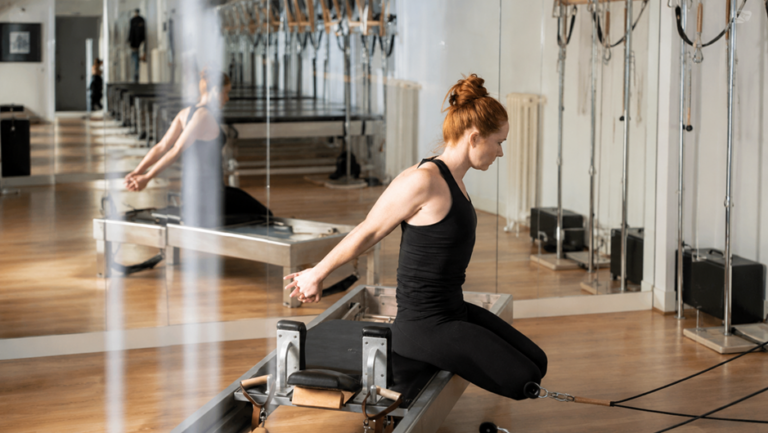
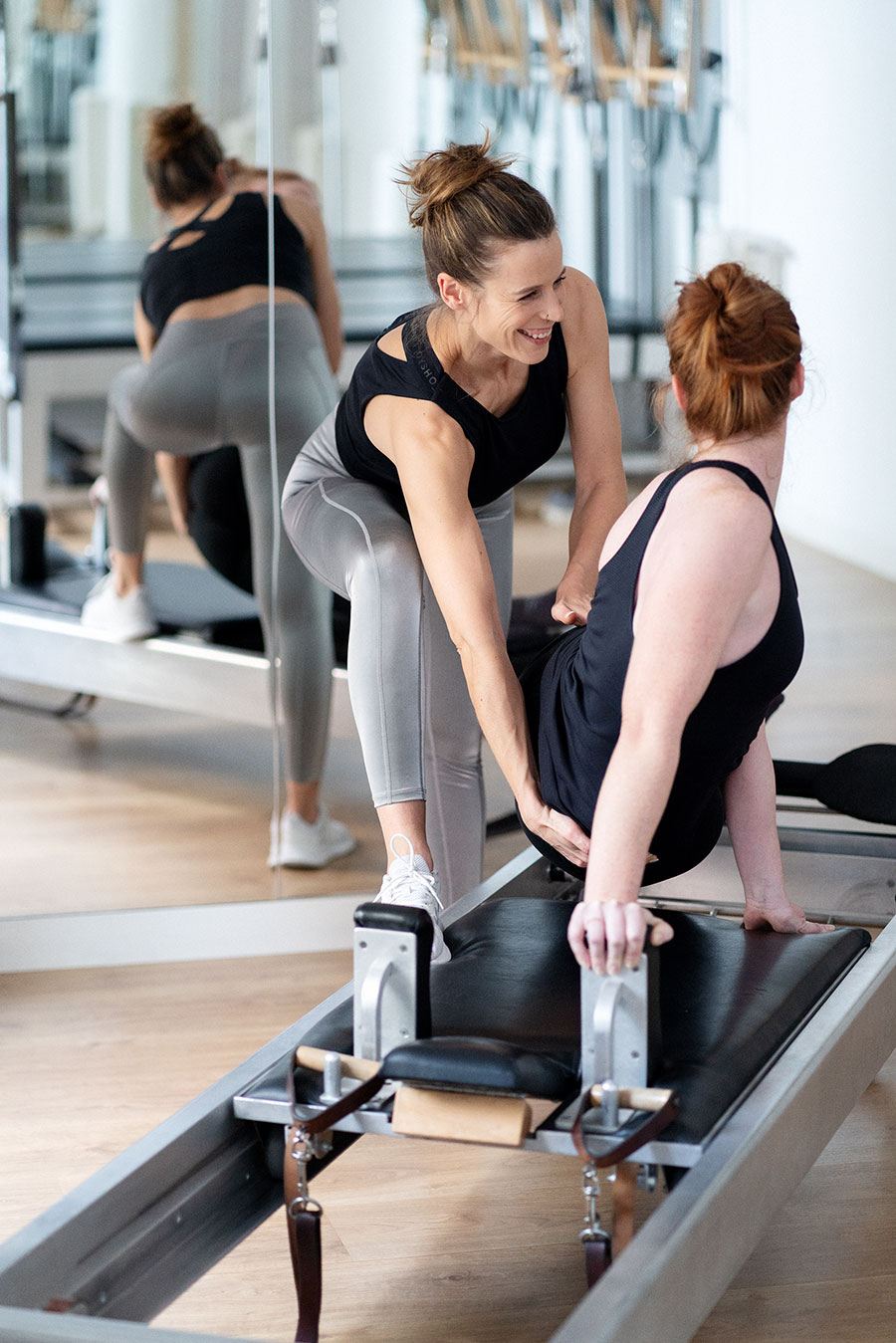
This is the most important piece of equipment in the method and the one with which, whenever possible, except in cases of pain or injury, we will start the session. The reformer helps, through its design and its spring system, to align our body, to balance the supports and loads and to help us find the correct muscles to work on in the different exercises, not only toning them, but also making them more flexible.
Mattress or mat
The mat is another part of the system that needs to be worked on. It is fantastic for helping us to strengthen our energy centre and in general the whole body, because in this case there are no external aids as there are on the reformer. That's why the mat is considered a real challenge, and it's ideal to practice the exercises on it once you've done the routine on the reformer.
Other equipment in the system
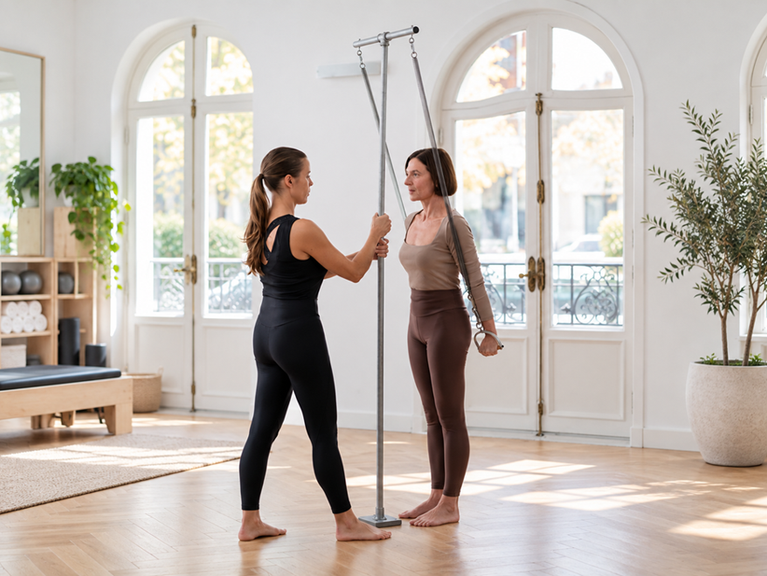
Within the rest of the apparatuses we find some very well known ones such as the Cadillac, the chairs or the barrels, but also other less known ones such as the Pedi pole, the toe stretcher or the foot corrector. The function of these devices is to perform more specific work on those qualities or parts of the body that each person needs to strengthen the most. Let's say that they are used to do a more analytical workout at the end of the session and complement all the previous training on the reformer and the mat.
Tips for getting started with Pilates
- Try to arrive at your class in good time, calm, unhurried, and ready to maintain full attention so that you have a positive experience and can get the most out of it.
- Take some socks with you, as you will be doing the class barefoot, and look for comfortable, loose-fitting clothes that allow you to move your limbs freely, but not too wide, that show your silhouette and allow your teacher to see your posture and alignment correctly.
- It is important that you inform your teacher of your physical condition, if you have pain, injuries or if you have suffered or are going through any special situation. With this, your teacher will assess your needs and establish a criteria of priorities and adaptations to take into account in your first and successive sessions that will always help you to improve.
- Be patient and self-confident. At the beginning you receive a lot of information, it is normal to feel a bit overwhelmed, but little by little you will assimilate the knowledge and your body will integrate all the instructions that the teacher gives you.
- Try to use your concentration as much as possible to get the most out of your body and avoid getting distracted and thinking about other things. It will also be the best medicine for your mind.
Find a certified instructor
To practice the Pilates method, it is important that you have professionally certified teachers of the original Romana's Pilates method, who will have learned and understood the very system that Joseph Pilates asked to preserve and preserve.
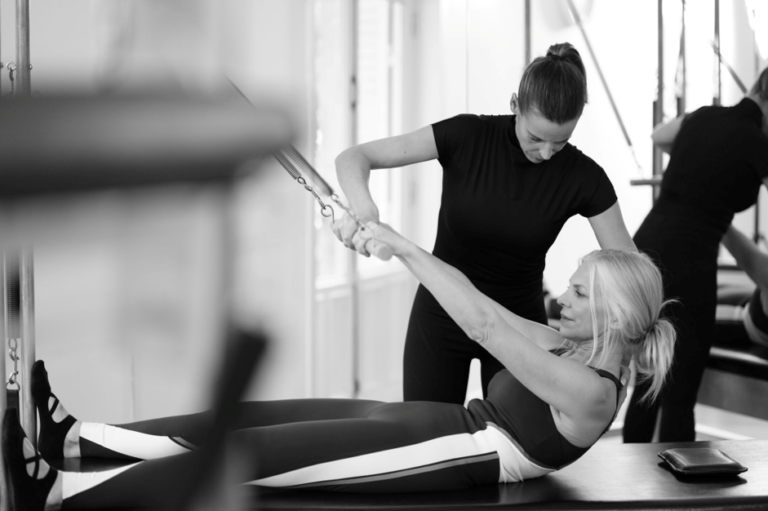
In addition to controlling and mastering all the exercises, apparatus, details and functions of the method, the instructor must be able to determine the physical condition and characteristics of the student and first carry out an initial assessment to establish needs and adapt and modify what the person needs to prevent any damage or injury. From there, the physical conditioning and functionality can be improved.
Start with basic level classes
The training with the Pilates method is developed at various levels according to the demand and control that you will acquire and based on the objectives that we want and need to work on. On many occasions it will simply be to maintain a good physical and mental state, and on other occasions to rehabilitate an injury or pain.
The basic level is the first level where you will begin to discover the fundamental principles and concepts of the method. You will start to become aware of your body, its weaknesses and limitations. You will also identify where you put the most tension and from where we must make the strength to move in the right way. From a functional and global work perspective, your body will start to feel stronger, more resilient, more flexible and you will correct your posture.
If you have any injury or pain, at this level we find all the necessary objectives to start rehabilitating your injury and improve it, with successive sessions, constantly, with the necessary modifications within each exercise, without putting at risk or compensating any other area of the body. In this way we will get the most out of the sessions so that the result is as efficient as possible.
You will finish your classes with a better feeling and well-being than when you started them.
Listen to your body and respect your limits
- Although you will start to notice results almost immediately, the Pilates method is not an easy exercise discipline. Ask and discuss any doubts you may have with your teacher. This will help you to fully understand the concepts, sensations and objectives of the exercises. It will also help you to become more aware of your anatomy, how it works and, above all, you will gain knowledge of your body and find pleasure and satisfaction in learning how to manage it.
- Bear in mind that, depending on your physical condition, you may feel different sensations of stiffness or slight tiredness the day after the first few sessions. This is normal and should not discourage you in any way. On the contrary, it is a sign that your body is working and adapting to the new stimulus you have given it.
- If at any time you feel any pain or discomfort, it is important to let your teacher know. The Pilates method adapts to the needs of each person, and if something doesn't feel right, adjustments or modifications can be made to the exercises to avoid any damage or injury.
I hope this information is useful for you - enjoy your Pilates classes!
Tell us what you thought of this article, please rate it (1 TO 5 STARS).