
If you wish to improve your Pilates practice and get the most out of each session, these tips will help you optimise your performance, both before and after each class. From choosing the right professional to how to recover properly, every detail counts towards achieving your goals.
Tips for before a Pilates session
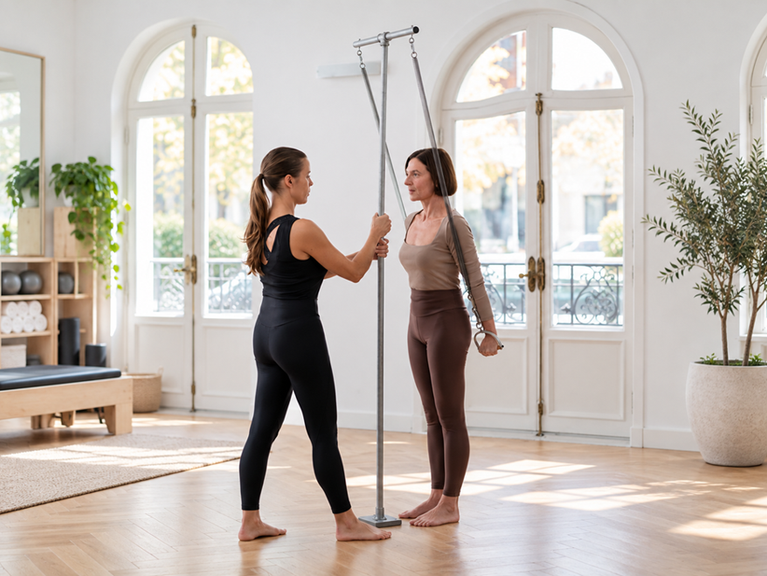
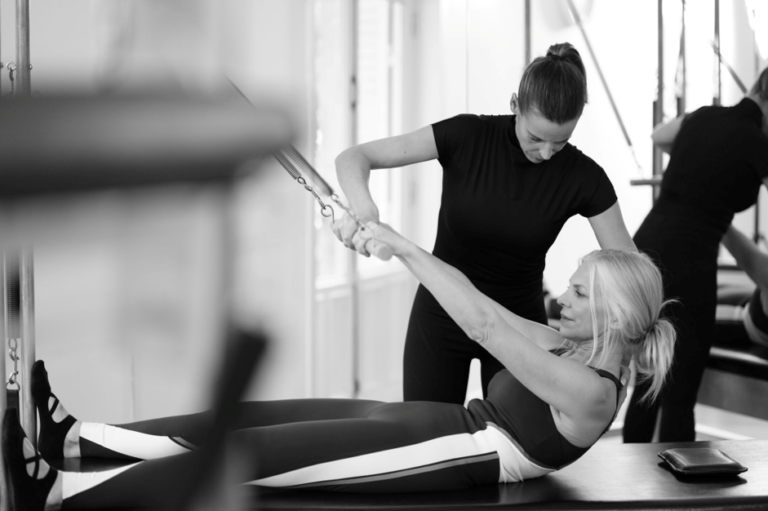
- Choose a qualified professional: Having a trained trainer is essential in order to improve your Pilates practice. A professional will know how to adapt to your needs, especially if you have any injury or discomfort, preventing you from straining delicate areas.
- Report any ailments or special needs: It is essential to inform your teacher of any previous ailments or injuries. In this way, classes can be adapted to your condition, allowing you to progress safely and continue to improve safely.
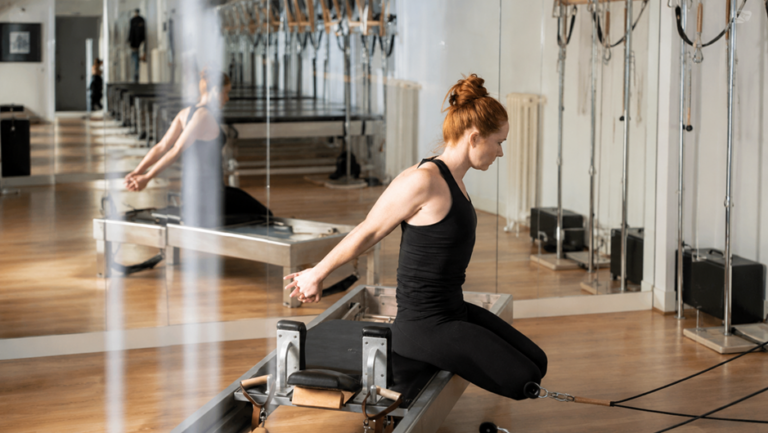
- Wear comfortable, close-fitting clothing: The right clothing is key to improve your Pilates practice. Choose clothes that are comfortable but not too wide, as this makes it easier for your instructor to observe and correct your posture during the exercises. Pilates is practised barefoot or with non-slip socks for stability.
- Hydrate adequately and eat lightly: Drink half a litre of water about two hours before your class to stay hydrated without feeling bloated. Avoid heavy meals before training to avoid discomfort during practice.
- Prepare your mind: Coming to class with a clear and calm mind is essential. Concentration is a key part of Pilates so try to relax and focus on your body so that you can improve your Pilates practice in each session.
Tips after a Pilates session
- Observe your sensations: At the end of the class, take a moment to notice how your body has changed. Analysing how you feel will motivate you to continue to improve with each practice, helping you to establish a deeper connection with your progress.
- Remember the corrections: The corrections you receive during the class are valuable. By remembering and applying those corrections in future sessions, you will be able to improve your Pilates practice gradually. A mental review at the end of each class will help you internalise these improvements.
- Hydrate properly: After training, hydrate gradually to avoid stomach upset. If you have sweated a lot, an isotonic drink can help replenish mineral salts and prevent fatigue.
- Post-training nutrition: One hour after your class, eat easily digestible foods that include carbohydrates and protein to aid muscle recovery.
- Motivate yourself to keep improving: Reflect on how you feel after each class and use that positive feeling to keep you committed. Improving your Pilates practice is an ongoing process, and each session will bring you closer to your goals.
By applying these tips, you will be able to improve your practice of Pilates consistently and safely. Every little tweak, both before and after your classes, will make a difference to your progress and overall wellbeing, so enjoy your session!
Tell us what you thought of this article, please rate it (1 TO 5 STARS).