
In a world where health and wellbeing are becoming an increasing priority, the combination of Pilates and physiotherapy emerges as a powerful synergy to improve quality of life. The Pilates method, known for its effectiveness in strengthening the body and improving posture, takes on a new dimension when delivered by physiotherapy professionals. This holistic approach not only helps recover from injuries more efficiently, but also promotes safe, personalised training. In this article, we will explore how physiotherapy and Pilates work hand in hand to offer a holistic solution to various physical conditions, with a special focus on our Pilates centre in Madrid, where quality and professionalism define our teaching.
What is Pilates and how does it relate to physiotherapy?
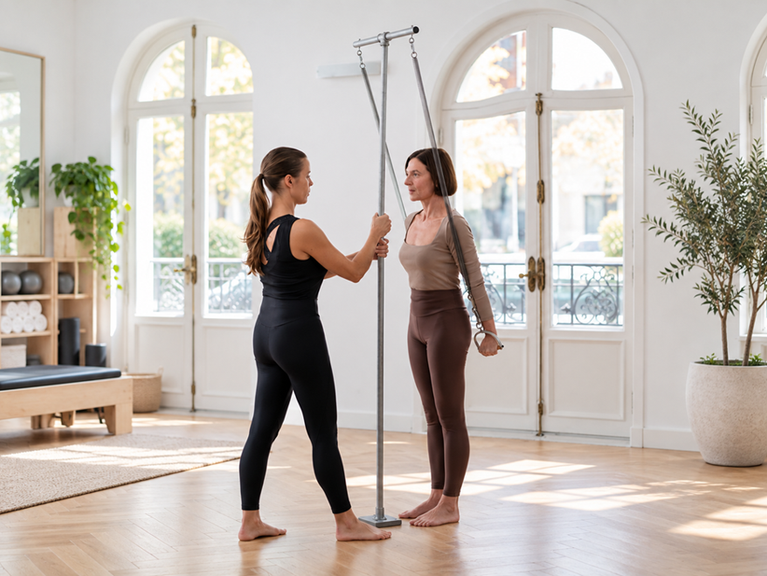
The Pilates method is considered a valuable tool for the recovery of physical dysfunctions and injuries. If the instruction of the method in class is carried out by a professional physiotherapist, a qualified health professional with knowledge of anatomy, physiology, biomechanics or pathology, it adds quality and rigour to its practice, guaranteeing safe and risk-free training.
Each body is unique, with its own capacities and limitations, so based on them we must know how to enhance and improve them, strengthening the weak areas and protecting the delicate ones, avoiding forced positions that can cause injury or pain. This is the basis of the work of the Pilates method, which is also shared by physiotherapy: a specific physical treatment focused on the recovery of structures, and the development, maintenance and recovery of capacity, functionality and mobility. In addition, both share a holistic view of the body.
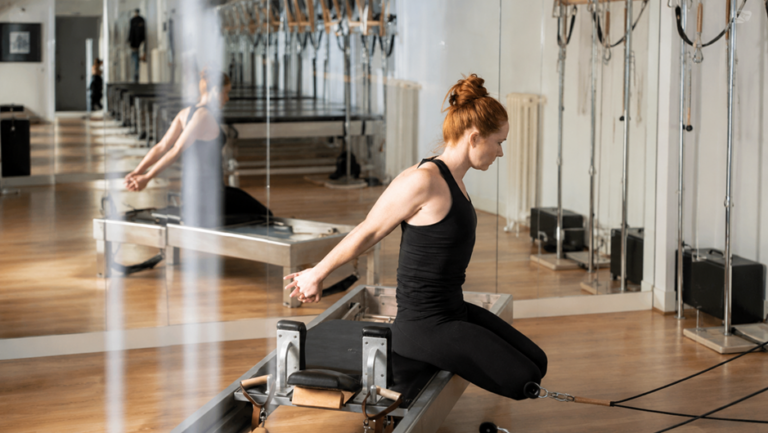
The method helps to correct possible muscular imbalances that cause pain or discomfort. It also strengthens the internal musculature to enhance overall functionality, seeking an aligned and correct posture. At the same time, physiotherapy works manually and analytically on the injured structures to recover their function and readapt them, with the help of Pilates to reintegrate them into the body's functionality and efficiency.
A multitude of pathologies are indicated for treatment with physiotherapy, using various techniques that help to relax muscles, reduce inflammation, mobilise and articulate structures. And they benefit from the Pilates method as a safe and preventive training discipline. In short, we can say that physiotherapy and the Pilates method are the perfect combination for the treatment and recovery of injuries or ailments, and even, if there are none, to enhance their prevention and the maintenance of physical and mental well-being.
The role of the physiotherapist in the practice of Pilates
The physiotherapist plays a key role in teaching the Pilates method, especially when it comes to adapting and optimising exercises for individuals with specific needs. As qualified health professionals, physiotherapists bring an in-depth knowledge of human anatomy, physiology and biomechanics to the practice of Pilates. This allows them to identify and correct inefficient or potentially harmful movement patterns, ensuring that each movement contributes to the overall recovery and strengthening of the body.
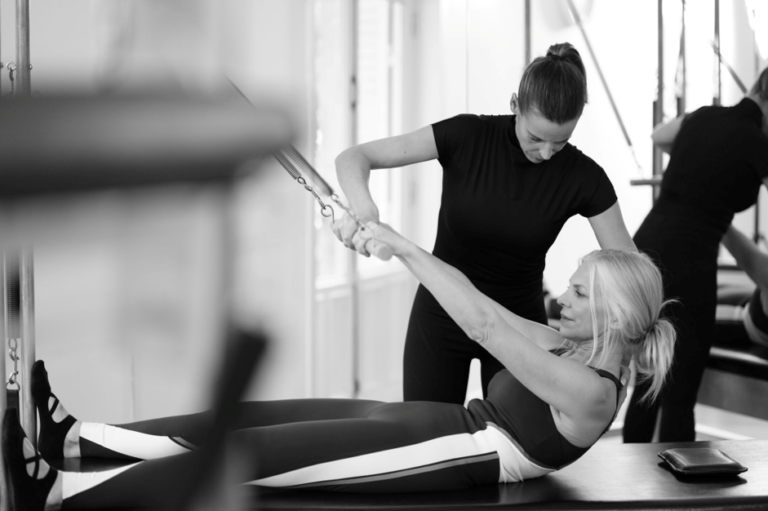
In Pilates sessions led by physiotherapists, each exercise is meticulously adjusted to align the spine and strengthen the core muscles, which are essential for stability and injury prevention. In addition, the physiotherapist can detect muscle imbalances or mobility limitations that might go unnoticed in a traditional Pilates class, providing personalised corrections that improve results and minimise the risk of relapsing old injuries or developing new ones.
Personalised training for maximum safety
Personalisation of training is essential to ensure maximum safety and effectiveness in the practice of Pilates, especially when working with people who are recovering from injury or who have chronic conditions. Physiotherapists use detailed assessments to understand each individual's capabilities and limitations before designing a tailored exercise regime. This approach ensures that every aspect of the Pilates programme is aligned with the specific needs of the patient's body, maximising benefits while minimising risks.
Moreover, personalisation goes beyond the physical adaptation of the exercises. It also includes adjustments to the intensity, frequency and duration of the sessions to match the individual's evolving physical condition. For example, a patient recovering from back surgery will require a very different programme to someone who is using Pilates to improve their general fitness. By focusing on safety and adaptability, the physiotherapist ensures that Pilates is not only effective but also sustainable in the long term, avoiding overtraining and promoting a balanced development of the body.
How do Pilates and physiotherapy complement each other?
The integration of Pilates and physiotherapy creates a powerful therapeutic approach that benefits physical rehabilitation, injury prevention and the improvement of general wellbeing. These two disciplines complement each other in several essential ways, making their combination a highly effective tool in health care.
- Preventive and corrective approach.
- Personalised rehabilitation.
- Improvement of body functionality.
- Continuing education about the body.
In short, the synergy between Pilates and physiotherapy not only facilitates faster and more effective recovery, but also educates and empowers patients in the management of their health and wellbeing. This multidisciplinary collaboration is what defines centres like Elite Pilates in Madrid, where the combination of these advanced practices promotes a holistic approach to physical health.
At Elite Pilates all our teachers are physiotherapists. Give us a call and find out more about our unique approach at Pilates and physiotherapy in Madrid.
Tel. 91 4357838. 628 887552. contacto@elitepilates.net
Tell us what you thought of this article, please rate it (1 TO 5 STARS).