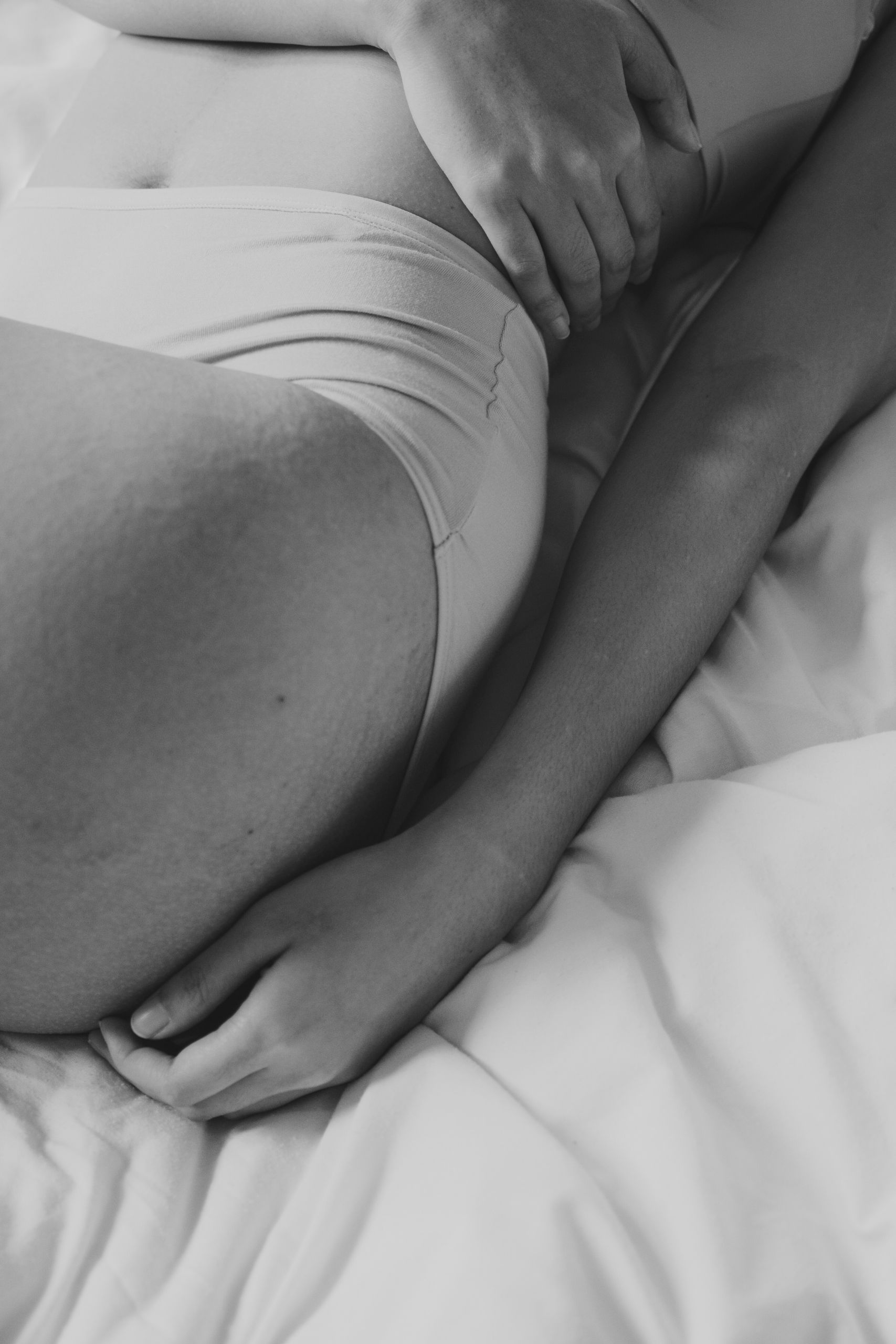
The Pilates Postpartum offers a number of specific benefits that can aid recovery after childbirth. Here are some of the main benefits:
- Strengthening the centre: During pregnancy, the muscles of the abdomen and pelvic floor can weaken due to the stretching and weight of the growing uterus. Pilates focuses on strengthening these deep core muscles, which can help improve abdominal stability and support to prevent problems such as urinary incontinence and vaginal prolapse.
- Improved posture: After childbirth, many women experience postural changes due to muscle weakness. Pilates helps strengthen the deeper muscles that support the spine and promotes proper alignment, which can help improve posture.
- Reconnection with the body: Many women may feel disconnected from their bodies due to physical and hormonal changes. Pilates promotes body awareness.
Safe Pilates Exercises After Childbirth
Pilates focuses on the activation of the core muscles and, of course, also on the pelvic floor.. So this method is very beneficial in helping women regain strength and stability in this area. In addition to Pilates, consider incorporating specific pelvic floor exercises such as Kegel or hypopressive exercises to strengthen the pelvic floor in a more targeted way.
However, we always recommend doing it under the supervision of a professional to avoid poor execution of any exercise and thus work safely to avoid possible ailments or injuries.
Importance of Professional Supervision
Professional supervision in the practice of postpartum Pilates is of utmost importance for several reasons:
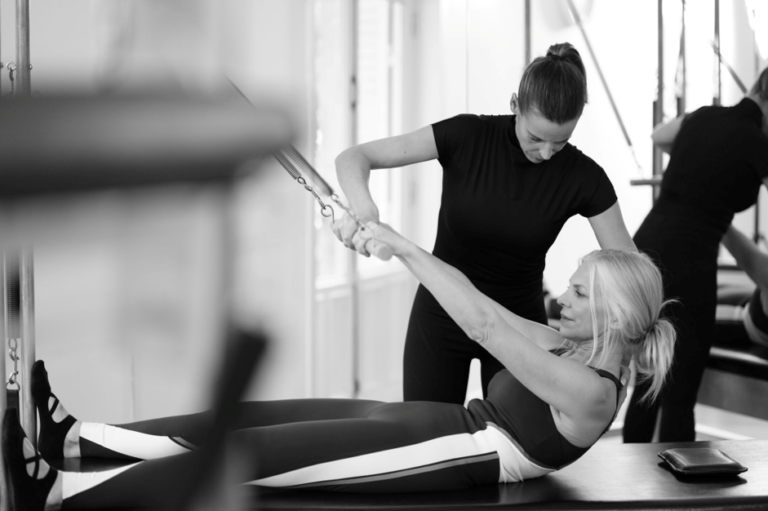
After childbirth, a woman's body undergoes significant changes, especially in the abdominal and pelvic floor musculature. A Pilates teacher can properly assess each woman's individual needs and adapt the exercises to avoid injury and maximise the benefits.
A trained practitioner can address each woman's needs, helping her to regain muscle strength and function safely and effectively, as well as correcting these muscle imbalances and improving body alignment. In short, professional supervision in Pilates is essential to ensure the safety and effectiveness of the method after childbirth.
Tips for Starting a Pilates Routine After Childbirth
Starting a Pilates routine after childbirth can be a great way to regain strength and flexibility, as well as strengthen your abdominal and pelvic floor muscles.
Before you start, be sure to check with your doctor to make sure you are physically ready for it and that there are no complications to be considered.
During the first few Pilates sessions, pay close attention to how your body feels. Working with a certified Pilates instructor can be very beneficial. They can adapt the exercises to your specific needs and make sure you are performing the movements safely and effectively.
When to Start Postpartum Pilates Classes?
Generally, if you have given birth vaginally and without complications, it is recommended to respect the quarantine period, i.e. approximately 6 weeks from the day of delivery. During this time, your body needs time to recover and return to its natural state.
In the case of a caesarean section, you may need to wait a little while to allow your scar to heal. However, there is no specific time to start Pilates after childbirth, so the most important thing is to listen to your body and start gradually when you feel ready.
Special Considerations for Pilates After Caesarean Section
Pilates can be a safe and effective way to aid post-operative recovery and gradually strengthen the body. Here are some considerations for practising Pilates after a caesarean section.
- It awaits medical approval: Before beginning any type of exercise, including Pilates, it is crucial to get your doctor's approval. This is especially important after a caesarean section, as you need to make sure your incision has healed enough to begin an exercise routine.
- Modify exercises: It is important to avoid exercises that put stress on the scar and abdominal muscles. Avoid exercises that put pressure on the abdominal area.
- Focus on breathing and stability: Pilates focuses on controlled breathing and core stability. These aspects are especially important after a caesarean section, as they can help to strengthen abdominal muscles and improve torso stability.
Tell us what you thought of this article, please rate it (1 TO 5 STARS).