
Our body posture says a lot about us. Not only does it give us information about areas of our body that may be more prone to problems in the future, but it can also reveal aspects of our personality and the way we relate to our environment.
According to the GDS method, The different postural attitudes are created from the predominance of certain muscle groups that work together, forming what we know as muscle chains. Below, we offer you a summary of each of them, and how they affect both our body posture and our health.
What types of muscle chains are there and how do they relate to body posture?
Relational chains
Locking and protection chain
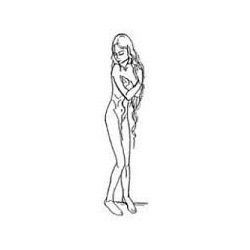
In technical terms we call this chain AL or anterolateral. When this chain predominates, we observe an attitude of withdrawal in which the shoulders are rolled inwards as well as the knees, a sign of reserve. This is why this type of person tends to be introverted and usually very quiet if they are not in confidence. They are orderly and perfectionist and analyse things a lot.
This chain is involved in the defence mechanism against physical trauma and in the phenomena of visceral suffering. People in whom it is very active are more likely to be cold and to suffer, for example, from circulatory problems, gallstones, urinary incontinence or constipation, as well as shoulder, knee or ankle sprains.
Opening chain
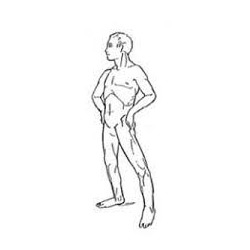
Also called PL or posterolateral chain, this is the opening chain where we find an arched or unfolded attitude. This type of person walks with arms and legs apart and carries the pelvis forward. They tend to have flat feet and are susceptible to back pain, herniated discs, osteoarthritis in the hips or meniscus problems.
Personality-wise they tend to be extroverted and have a great need for communication, they love to meet people and like to attract attention. Sometimes they can even be too outrageous. In the case of an excess of this chain, we can find people who find it difficult to control their anger.
Personality chains
Chain of affectivity
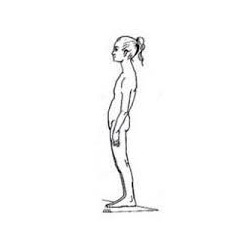
This is the AM or anteromedial chain, where we find people with shoulders rolled forward, with a very marked kyphosis, a sunken sternum and valgus of the knees (knees in X). All this makes them more susceptible to osteoarthritis of the knees, herniated discs, hiatus hernias, bunions or haemorrhoids, among other problems.
Personality-wise, they tend to be self-centred and in need of affection, but they can become a bit hypochondriacal, selfish or possessive and are more prone to depression in case of a very marked predominance of this chain.
Cerebrality chain
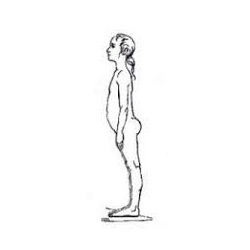
This chain, PM or posteromedian, is responsible for keeping us on our feet. When it predominates we find people with a great need for action and to be useful, with a lot of energy and a dynamic aspect. They are very cerebral and reflective people, with a great capacity for work and who constantly need to discover new things, but when it is in excess it can generate an attitude of domination in order to maintain control.
The predominant image of this chain results in the figure of a general, with the body and chest projected forward and the chin raised. They usually have hyperextended knees, cavus feet (with a high arch) and claw toes. All this predisposes these people to suffer from arthrosis of the spine, lumbar problems, headaches, vertigo or chondromalacia patellae, among others.
Reactivity chain
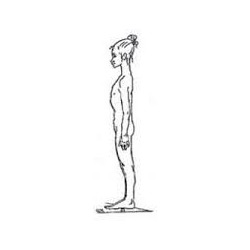
This chain, called PA or posteroanterior, is activated during inspiration. When there is a predominance over the others, the result is a typology where we find a spine without curvatures, very upright and in permanent tension, especially in the cervical area where they usually suffer pain. This type of person is usually very coordinated and moves with elegance.
Personality-wise, they are quite spiritual and are always in search of an ideal. They strive for perfection and are often very receptive. They can sometimes show great rigour and this can turn into intransigence in case of excess.
Chain of Emotionality
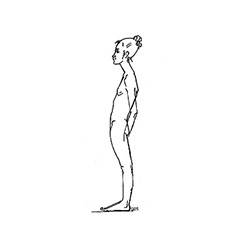
This chain works in coordination with the previous chain and is activated during expiration. It is the AP or anteroposterior chain. People in whom this chain predominates have an ungainly appearance and are suspended in their muscles, which has the opposite effect to the one mentioned above and makes it difficult for them to stand upright. They tend to have hyperlaxity in their ligaments, so they often have problems related to this, as well as vertebral or return circulation problems.
At the personality level, they are very emotional people. They are usually very cheerful and adapt easily to any situation, which can sometimes make them too malleable or too easily influenced. In the case of excess, they can become irresponsible.
Chain of impulsivity
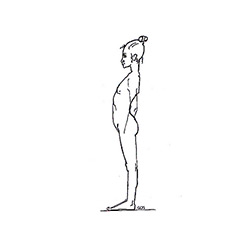
This typology arises from a mixture of the last two named chains. It is the PA-AP chain, where we find a very important rectification in the neck and the rest of the spine, with the exception of the lumbar area, where we find an increase in the curvature. Among the problems they can suffer from, we could find chondromalacia of the knees, frequent blockages at cervical level, listhesis of the last lumbar vertebra or abdominal diastasis.
These people project the typical posture of gymnasts or dancers and tend to be very impulsive and competitive. They want to be different and like to assert their ideas, and can be very activist in putting them into action. In excess they can be very nervous.
These are the different typologies that we can find, although it is very common that our posture is the result of a mixture of mainly two of them.
Balance in body posture
Bear in mind that, in addition to personality, there are other factors such as the activities we carry out on a daily basis or the practice of different physical disciplines that lead us to adopt specific postural attitudes.
It is important to understand that the ideal body posture is the balance between these different muscle chains. Excessive predominance of one or the other can lead to imbalances that result in long-term physical problems. Therefore, disciplines such as Pilates or physiotherapy play a crucial role in correcting and maintaining proper posture.
If you want to improve your body posture and prevent future problems, we recommend that you consult a health care professional. physiotherapy Madrid or explore techniques such as Pilates classes, The exercises will help you to strengthen and align your body in a balanced way.
Campignion, P. (2002). Muscle and joint chains. GDS method. Alicante. Ed. Lencina- Verdú.
Tell us what you thought of this article, please rate it (1 TO 5 STARS).