
Have you been diagnosed with osteoarthritis? In that case, before you panic, how can you physiotherapists in Madrid, We offer you useful tips to understand the disease, its treatment and how Pilates for osteoarthritis can help you improve your quality of life. Osteoarthritis is one of the most common joint diseases and a major cause of disability. It generally appears with age and is characterised by degeneration and loss of joint cartilage.
What types of osteoarthritis are there?
Osteoarthritis is classified into two types:
- Primary or of unknown cause, influenced by age, sex, genes,
- Secondary or known cause, e.g. trauma, congenital, metabolic or endocrine diseases.
The main areas that tend to suffer from osteoarthritis vary according to gender. Hand and knee osteoarthritis predominates in women and hip osteoarthritis in men.
What are its main symptoms?
In addition to muscle contractures, instability and crunching, the most frequent symptom is pain, which appears when we load the joint and is relieved with rest, although it can even wake us up at night. In addition, over time, stiffness appears in the joint, reducing our quality of life. This stiffness is very common when getting out of bed at the beginning of the day until the joint becomes functional.
How can Pilates help with osteoarthritis?
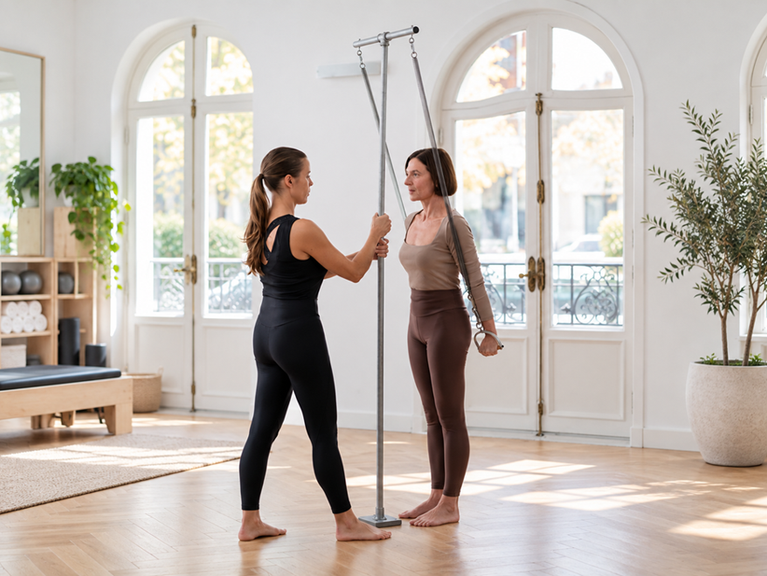
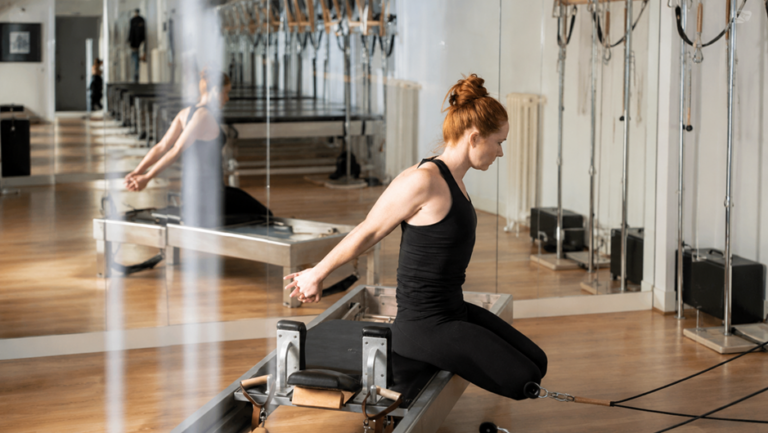
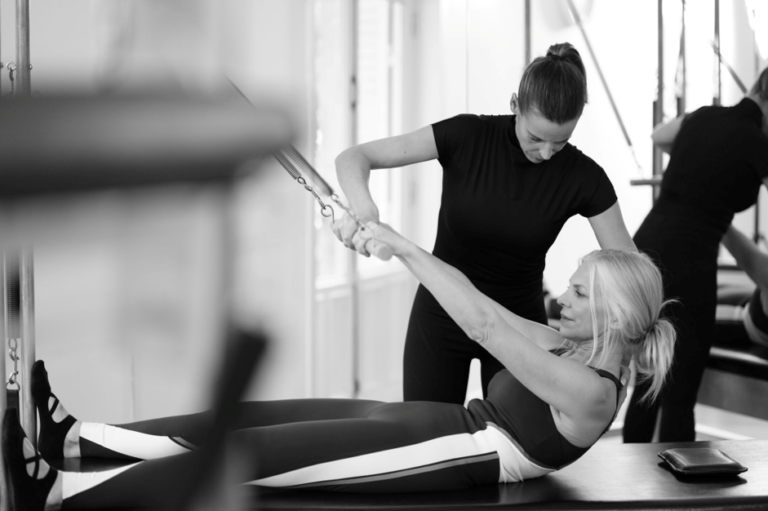
Pilates and osteoarthritis are related in a beneficial way by helping to improve mobility and reduce pain. Our aim as physiotherapists will be to slow down the progression of the disease, preventing disability, relieving that pain, restoring functionality and teaching you correct postures and adapted exercises. Pilates is an effective tool for managing all types of osteoarthritis, especially knee and hip osteoarthritis. Here we explain how it can benefit your condition:
- Weight control: One of the most important risk factors is being overweight. A healthy diet and weight loss can slow the progression of osteoarthritis and alleviate symptoms. Pilates can be an excellent form of exercise to help you reach and maintain a healthy weight.
- Pain management: In acute phases, relative rest is crucial. Avoid prolonged immobilisation so as not to encourage muscle atrophy. Applying cold with ice packs for 10-15 minutes can be very effective in reducing pain.
- Use of aids and equipment: Using a cane on the sound side can reduce the load on the affected joint. In addition, cushioned heel cushioned shoes help to absorb shocks.
- Water exercises: In the early stages of pain, water exercises are ideal for maintaining function and mobility without putting too much pressure on the joints. Water provides resistance and helps to strengthen weak muscles.
- Heat therapy: In chronic phases, applying heat to the joint can relieve muscle tension and pain. In physiotherapy, techniques such as infrared, ultrasound, and radiofrequency with INDIBA, together with manual therapy and bandaging, can be very beneficial.
- Aerobic exercise: Include non-impact aerobic exercise, such as cycling or the elliptical trainer, to improve endurance without damaging joints.
- Physical therapy and pilates: Physical therapy is essential to manage limitations in daily activities. Specific exercises to strengthen and stabilise joints are crucial. In the case of osteoarthritis of the knee, the focus is on quadriceps exercises, while for the hip, abductors and extensors are worked. In addition, Pilates is highly effective in balancing and readjusting the affected structures in a holistic way.
Specific recommendations for osteoarthritis
If you have osteoarthritis of the knee
- It will help to wear an elastic bandage or knee brace to off-load and stabilise the joint when you are carrying your weight in pain.
- Remember to bend and stretch your knees several times a day to keep them mobile.
- Do not stay with the knee in the same position for too long.
- If sleeping increases the pain, put a small pillow or folded towel under your knee to soothe it and take pressure off.
If you have osteoarthritis of the hip
- Walking and climbing stairs is good for you, but not only forwards, but also backwards and sideways to control your strength in all directions.
- Complement your exercise routine by performing hip balances with good pelvic alignment.
With this advice, above all, we want you to know your condition well, as a large part of the success in the prevention and evolution of the disease will be determined by the professional information you receive about it, and all of this will be reflected in your wellbeing.
Tell us what you thought of this article, please rate it (1 TO 5 STARS).