
Cold sweat, dizziness, the sensation that an alien is taking over your chest, preventing you from breathing, a racing heart... Symptoms that can be mistaken for a heart attack and that can occur for no apparent reason.
Practically seven out of every hundred people reading this text in Spain suffer from anxiety. The same number suffer from depression. Between 35 and 50 per cent of these people receive no treatment or inadequate treatment, not to mention the dangers of self-medication. These are figures from the Mental Health Confederation for Spain.
Stress, anxiety, depression go hand in hand in a world in which it is difficult for us to recognise that some of these mental illnesses outnumber cardiovascular disorders or cancer. Also, according to data from the Mental Health Confederation for Spain, one in four people will have a mental disorder in their lifetime.
More than 300 million people worldwide live with depression, a mental health problem that has increased by 18.45 per cent between 2005 and 2015. Taboo subjects such as suicide are beginning to be addressed precisely to prevent it, as it has become the second leading cause of death in people aged 15-29.
Of course, these figures are being updated, as the covid pandemic has led to an increase in cases of anxiety and depression, according to the scientific journal Psychiatry Research. According to this prestigious publication, 24 percent of the population suffers from insomnia, 22 percent from stress, 16 percent from depression and 15 percent from anxiety.
It is no use looking the other way, the mental health of this world is increasingly deteriorating and it is no use keeping quiet or being ashamed. Uncertainties about uncertainties, confinements, physical and social distances, fear of contagion, concern for family members, thousands of bereavements..., a feeling of losing control.
Obviously, any persistent symptoms of stress or anxiety, before they turn into depression, should be referred to doctors who will refer us to mental health specialists: psychiatrists and/or psychologists.
Regardless of whether they end up prescribing anxiolytics, relaxants or antidepressants, all will agree that the best adjuvant is physical exercise.
A few years ago a book appeared that was a huge success: More Plato and less Prozac, which referred us to the philosophers to remedy our everyday problems. Greco-Latin culture left us with the saying “mens sana in corpore sano”, which has come down to us as a great piece of advice: “a healthy mind in a healthy body”. Therefore, the recommendation would be extended to “more pilates and less orfidal”, that anxiolytic, whose use (mainly among women) is causing additional problems.
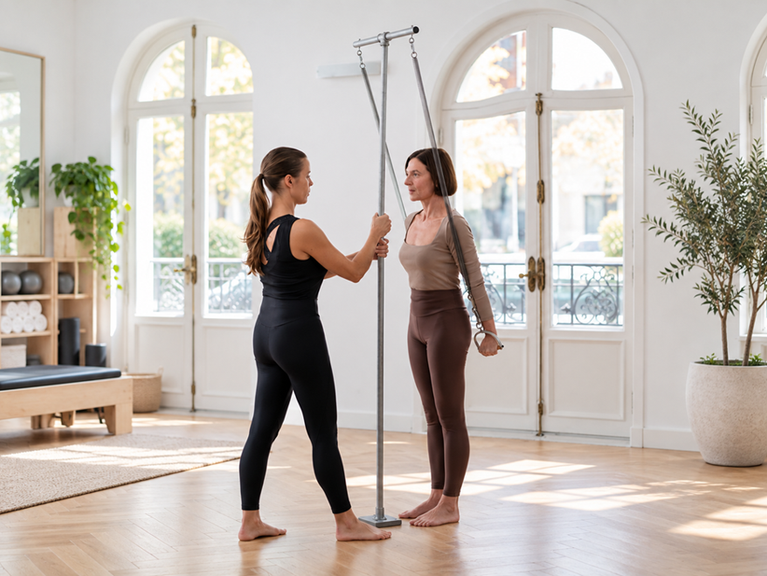
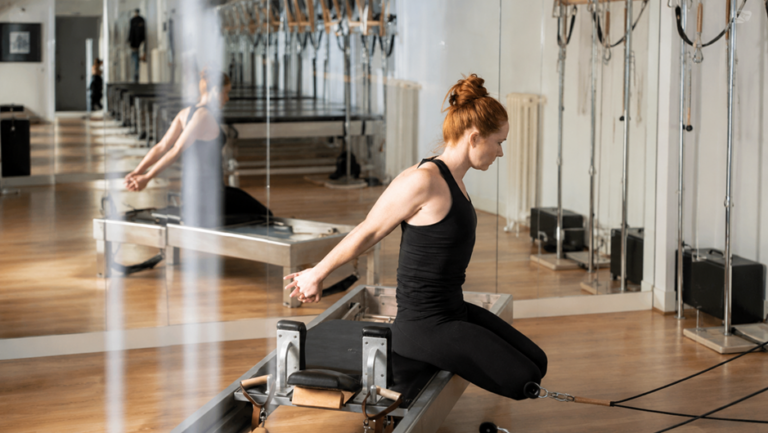
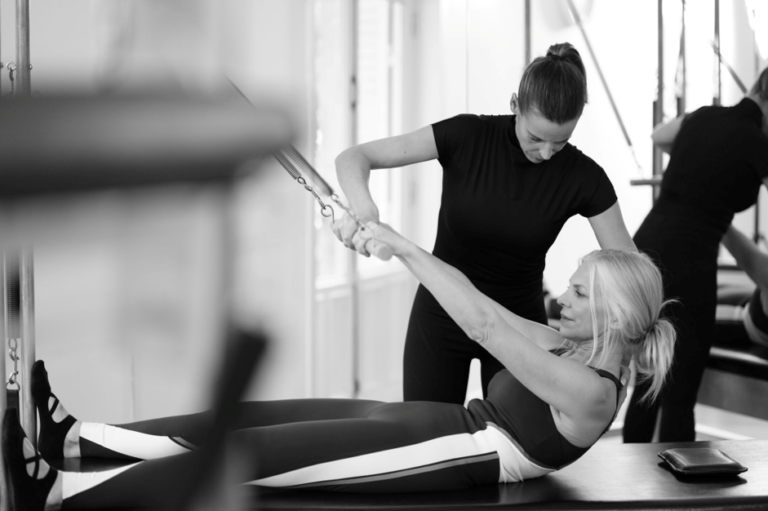
The best adjuvant to healing and preventing our mental health from being affected, as well as living with a certain stoicism, is to regain control through Pilates.
As well as bringing a routine into this world of uncertainty, Pilates is particularly appropriate because:
- It works deeply on mental concentration in the performance of each exercise.
- It facilitates the control of our body against external tensions.
- It facilitates the unblocking of breathing, which blocks us so much in situations of stress and anxiety.
- It also unblocks our muscles, which are exposed to unconscious tension.
- Avoid the sedentary lifestyle that is so closely related to our mental health.
- As with any exercise, it increases our level of endorphins, our natural happiness hormone.
Although any time in the past was never better, let's follow the classics and start this 2021 by moving the body and the spirit, the two pillars on which the Pilates method offers the best solution. We are not alone, at Élite Pilates there is always a teacher who, with complicity, will lead us along the path to physical and mental health.
Signed: Alfonso Roldan
Journalist and Elite Pilates student
Tell us what you thought of this article, please rate it (1 TO 5 STARS).