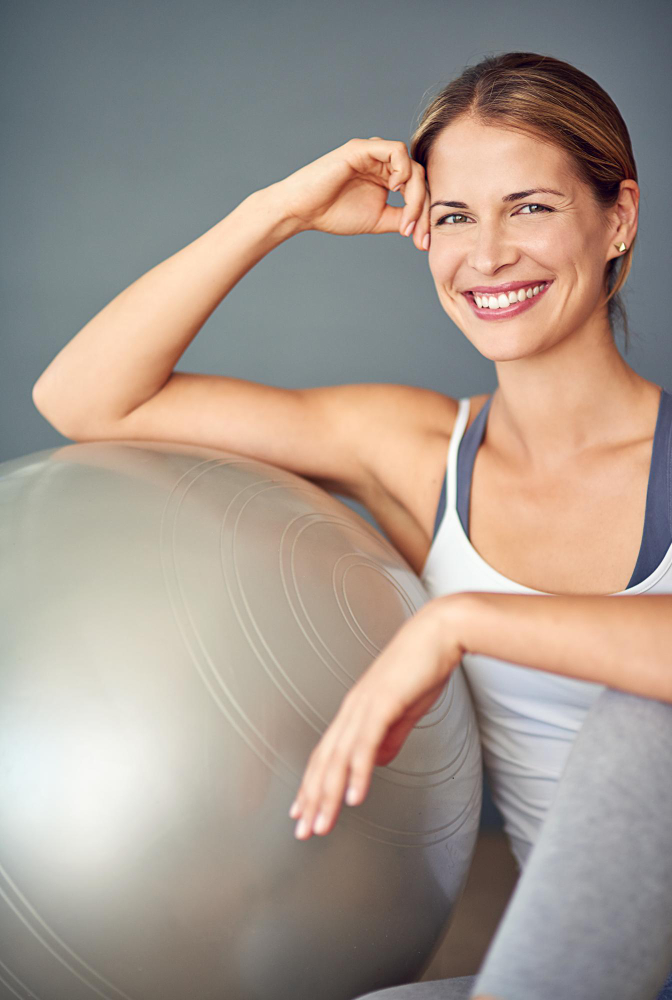
If you've made a resolution to really take care of yourself this year, Pilates could be the perfect starting point. It's not a routine that you give up when the January motivation wears off: it's a practice that builds a foundation for feeling better in your day-to-day life. Throughout this guide you'll see how to start Pilates in 2026 in a realistic way, with achievable goals, a 4-week plan and tips on how to keep the habit from falling off halfway through. Plus, you'll learn why the method is ideal if you're looking for a strong, flexible and more mindful body, without the need to beat yourself up.
Pilates as a Life Purpose. Beyond a Month
Why Pilates is a long-term health tool
Most New Year's resolutions fail for one simple reason: they are meant to be temporary. Pilates, on the other hand, works very well as a habit because it is progressive, adaptable and kind to the body. If you're a beginner, you'll start with basic exercises, and work your way up gradually without feeling like you're racing against the clock. That steady progression is what makes Pilates 2026 not a January push, but a steady commitment. Over time, regular practice improves posture, strengthens the core, keeps joints mobile and helps you move with more control. In short: it makes you more functional, not just stronger.
Let go of superficial goals and focus on holistic wellbeing.
It is normal to want visible changes, but when the goal is only aesthetic, it is often short-lived. Pilates invites you to change the focus from the “perfect body” to holistic wellbeing. What is worked on here is the quality of movement, stability and the mind-body relationship. This translates into something very practical: less accumulated tension, better breathing, more energy and an overall feeling of balance. And, yes, the body changes: it tones up, muscles lengthen and posture improves. But the best thing is that this change comes with a healthy and sustainable foundation.
The Beginner's Guide: How to Start Pilates in January
Choosing a suitable centre.
If you are going to start Pilates, the first thing to do is to choose a suitable centre where they not only know the method in depth, but also have the right professionals who know how to adapt each session to the specific needs of each person to guarantee the best results in each case.
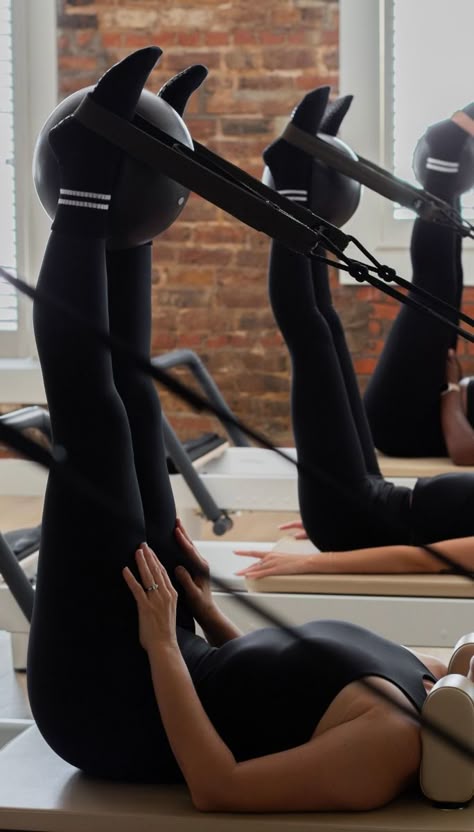
Similarly, it is also essential to understand that the Pilates machine method and the Pilates floor method do not exist as separate methods. The exercise method that Joseph Pilates created uses both the apparatus and the mat as possible tools to be used depending on the person with whom you are going to work. It is a mistake to separate the work on the apparatus (reformer, cadillac, chairs, barrels, etc.) from the work on the mat. The ideal is to use the equipment during each session and to do some exercises on the mat that will help us to strengthen the energy centre without assistance.
In addition, the mat is a perfect complement that can also be used at home to reinforce the work done in the studio. However, it is necessary to work on it beforehand with the help of a professional in order to understand how to do each exercise correctly and to guarantee success when practising it at home without supervision.
Basics: Powerhouse, breathing and control
Three ideas will be with you from day one:
1) Powerhouse: this is your strength or energy centre. It includes deep abdominals, pelvic floor, lower back and buttocks. In Pilates the movement starts from the core to help stabilise.
2) Breathing: it is not a detail, it is a tool. You learn to breathe consciously to improve control, reduce tension and sustain effort without blocking yourself.
3) Alignment and control: Pilates “is not about doing fast”, “it's about doing well”. Quality rules. Few repetitions with good alignment are worth more than many without technique.
New Year's Goals that Pilates Helps You Achieve
Improving posture and reducing back pain
If you spend hours sitting, your body is probably feeling it: stiff back, shoulders forward, neck strain. Pilates works on the very things that often go wrong: core stability, controlled spinal mobility and postural awareness. Over time, you get into a better position without even realising it. And when the body is better organised, the pain usually goes down. It's not magic: it's strength in the right places, and less compensation.
Toning the body without creating bulk
One of the reasons why many people choose Pilates as a purpose is that it helps to create a strong body without overloading the musculature. The toning comes from control, moderate resistance and overall work: abdomen, buttocks, back, legs and arms. In addition, by combining strength and mobility, the body looks “longer” and feels lighter. This is especially useful if you're looking for a routine that strengthens without punishing yourself.
Training for Success: 4-Week Start-up Plan
Weeks 1 and 2: Connecting with the breath and the core or energy centre
The first few weeks are fundamental to make a first contact and to start introducing the basic concepts of the method such as breathing or the use of the powerhouse in movement through the exercises.
We will focus on the client beginning to understand how to move correctly and to become aware of their body and avoid unnecessary tension. To do this we will work with lower resistance, fewer repetitions or smaller ranges of movement.
Week 3 and 4: Progression of basic exercises and increase in frequency
Objective: to build habits and progress without rushing. Ideally, in these two weeks, the client will learn all the basic exercises on both the reformer and the mat and will also begin to practice certain exercises on the other equipment. This work will allow them to improve their technique and then be able to do certain exercises on their own at home and without help, as a support to the work done in the studio.
The Pilates Mindset: Control and Concentration

Connecting mind and movement for mindful practice
The Pilates method is a conscious practice. You don't do exercises “just for the sake of it”: you observe how your pelvis is positioned, if your shoulders are tense, how your breathing responds. This attention helps you to move better and, in the process, reduces the mental noise of the day. That's why many people feel that Pilates not only trains the body, it also tidies up the mind.
Overcoming initial frustration and celebrating small gains
It's normal to get frustrated at first: coordinating breathing, keeping the core active and moving with control requires learning through practice and, although everyone can do it, it's not easy.
The solution is to lower your ego and raise your consistency. Adjust the level, repeat the basics and celebrate small steps: a more upright posture when walking or sitting at the computer, feeling your body stronger and more flexible when performing everyday tasks, or becoming more aware of your body and avoiding overload and unnecessary tension. That is the real path of a practice that lasts.
Equipment Needed to Get Started at Home and at the Centre
Apparatus, mat or matting and other basics
We consider it absolutely necessary to use the equipment. During the beginner level, we will mainly use the reformer and integrate the basic exercises on the mat, although it would be interesting to have other apparatus of the system (cadillac, chairs, barrels, etc.) in order to be able to do more analytical exercises depending on what we need to work on in each case.
Once the basics are acquired and there is some control, the work in the studio can be reinforced at home. To do this, you will initially need a mat and perhaps use small dumbbells to start with.
The importance of clothing and hydration
Dress in stretchy, comfortable clothing that allows you to move without restriction and does not ride up or get tangled. In the studio, non-slip socks are often a good idea. As for hydration: drink water before and after the session. Pilates is not always very sweaty, but staying hydrated helps muscles and joints respond better. Avoid practising on a full stomach.
How to Integrate Pilates into a Busy Life Routine
The power of constancy
It is essential, especially when starting to practice the Pilates method, to be consistent and disciplined. Ideally it is advisable to attend two classes a week. This ensures that not too many days go by between sessions and helps you to evolve much more quickly, integrating the learning process more effectively. But if you only have one hour a week, the important thing is to be consistent and avoid ”missing” a week. If you can't come on your usual day, change the day or do two sessions the following week.
Pilates as a complement to other sports and activities
If you already run, cycle or go to the gym, Pilates adds stability, control and mobility. A stronger core helps you transfer strength and compensate less. And if mobility is your thing, Pilates for flexibility is a great tool because it combines stretching with strength in controlled ranges, which often results in a lighter, more stable body.
Frequently Asked Questions
How long does it take to notice the difference when starting Pilates?
It depends on your starting point and consistency. Many people notice changes within 2-4 weeks (better posture, less tension, more control). More visible changes usually appear after 2-3 months if you practice regularly.
Is Pilates suitable for any age or fitness level?
Yes. Pilates adapts to different ages and levels because it allows you to modify ranges, support and intensity. If you have a specific injury or condition, it is also ideal to be supervised by physiotherapists.
What should I look for in a good Pilates centre or teacher?
Search:
- Training in the original method and experience.
- Individual classes that are tailored to your needs and where you can receive specific corrections.
- An approach that prioritises technique and security.
- Schedules/location that make it easy for you to be consistent.
Tell us what you thought of this article, please rate it (1 TO 5 STARS).