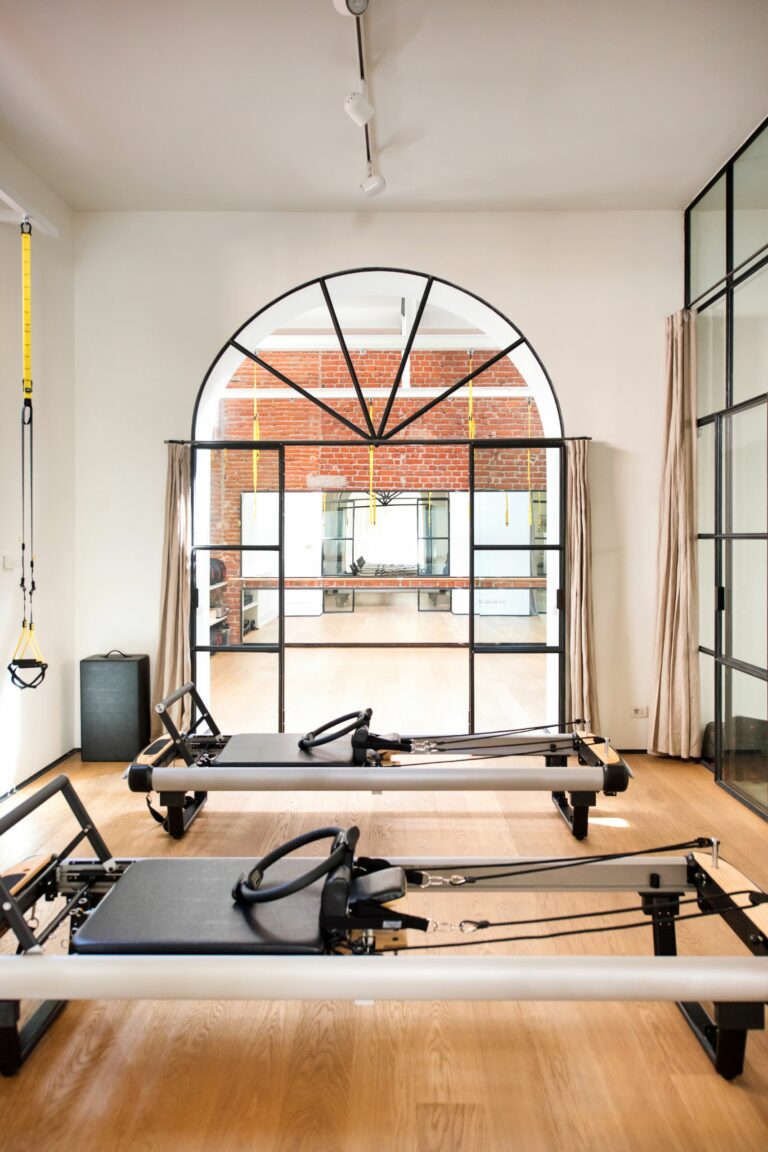

Many people discover Pilates looking to improve their fitness, alleviate discomfort or simply feel better in their body. However, when they start to find out more, a very common doubt arises: Are all Pilates classes the same?
The reality is that they do not. Although they share a common basis, there are very different approaches within this discipline. One of the most relevant of these is the difference between the Pilates conventional and therapeutic. Understanding what distinguishes each can help you make the right choice for your body and your needs.
Not all Pilates classes are the same
The Pilates method was created by Joseph H. Pilates with the aim of developing a strong, balanced and functional body through movement control. His original system, known as Contrology, is based on principles such as precision, concentration, breathing and body control.
Over the years, Pilates has become popular all over the world and has evolved into different formats. Today it is possible to find everything from group classes focused on fitness to completely personalised sessions aimed at physical recovery or posture improvement.
In this context, two approaches emerge that should be distinguished: the Conventional Pilates and the Therapeutic Pilates.
What is conventional Pilates
Conventional Pilates is usually practiced in collective or semi-collective classes, where several people perform a series of exercises guided by an instructor. The main objective is to improve general fitness, strengthen the body, increase flexibility and work on mobility.
In many cases, these classes are held on mat or with small accessories, following a common exercise sequence for all participants. This approach can be very beneficial for people looking to stay active, improve their muscle tone or incorporate healthy exercise into their routine.
Conventional Pilates provides benefits such as:
- improving flexibility
- muscle strengthening
- greater body awareness
- improved balance and coordination
However, as it is a more general format, does not always allow for a profound adaptation to the individual needs of each person..
What is therapeutic Pilates
The Therapeutic Pilates, Instead, it has a much more individualised approach. Its aim is not only to exercise, but also to to improve the functioning of the body when there is discomfort, limitations or postural imbalances.
In this type of work, the physical condition of the person is analysed beforehand: posture, mobility, history of injuries, muscular tensions or possible movement compensations. Based on this, exercises specifically adapted to each case are designed.
The Therapeutic Pilates is often applied in situations such as:
- cervical or lumbar pain
- postural problems
- scoliosis
- injury recovery
- recurrent muscle tension
- mobility limitations
In many specialised centres, this approach is further combined with physiotherapy, This allows a more complete and safer approach to the body.
The big difference: the purpose of the work
The main difference between therapeutic Pilates and conventional Pilates is not so much in the exercises as it is in the objective and the way to implement them.
In the Conventional Pilates the focus is usually on the general physical training. It is a healthy practice, useful for keeping active and improving physical condition.
The Therapeutic Pilates, The Commission, on the other hand, has a more corrective and preventive. It seeks to understand how each person's body moves, identify imbalances and work on them to improve posture, reduce tension and regain functionality.
This involves more precise work, with greater supervision and exercises carefully tailored to the client's needs.
For whom each is intended
Both approaches can be beneficial, but each approach responds to different needs.
The Conventional Pilates is usually suitable for people who:
- seek guided exercise and general wellbeing
- want to improve their flexibility and muscle tone
- wish to engage in regular physical activity
The Therapeutic Pilates, is particularly recommended for people who:
- suffer from cervical, lumbar or joint pain
- postural problems
- are recovering from injury
- feel that their body compensates or overloads easily
- need more personalised and secure work
Choose the appropriate approach can make a big difference to the results.
What can change in your body when you choose the right approach
When the work really adapts to your body, The changes are usually noticeable gradually but clearly.
Many people experience:
- improved posture
- reduction of stress and discomfort
- greater body control
- more mobility and stability
- a general feeling of increased physical well-being
Pilates, applied judiciously and with precision, not only strengthens the body, it also re-educates the way we move through everyday life.
How to know what kind of Pilates you need
If you have no discomfort and are simply looking for a healthy physical activity, a conventional Pilates class can be a good option.
But if you experience frequent pain, recurring strains, postural problems, or have suffered an injury, you may need a more personalised approach such as therapeutic Pilates.
In such cases, carry out a initial assessment with specialised professionals can help you understand what your body really needs and the best way to work on it.

Conclusion
Pilates can be an extraordinary tool for improving health and wellbeing, but it can also be a great way to improve your health. not all classes work the body in the same way.
Understanding the difference between the two options will allow you to choose the approach that is right for you. Because when the work really adapts to your body, the results change too. Contact Élite Pilates to clarify your doubts.
Tell us what you thought of this article, please rate it (1 TO 5 STARS).