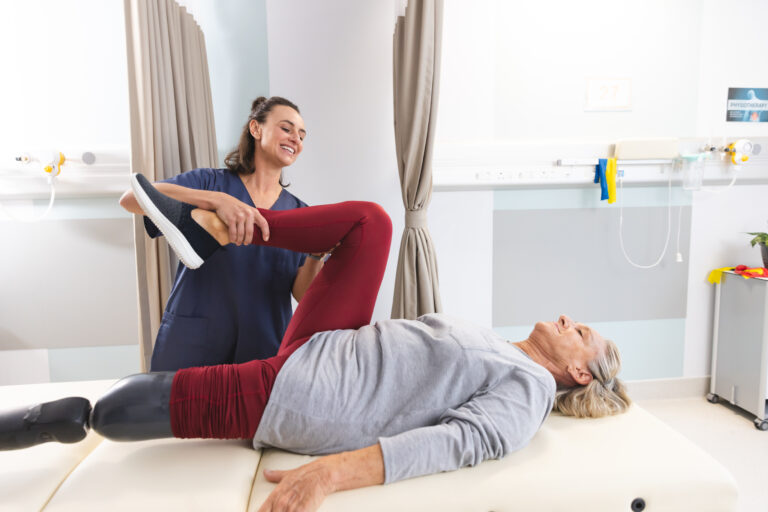
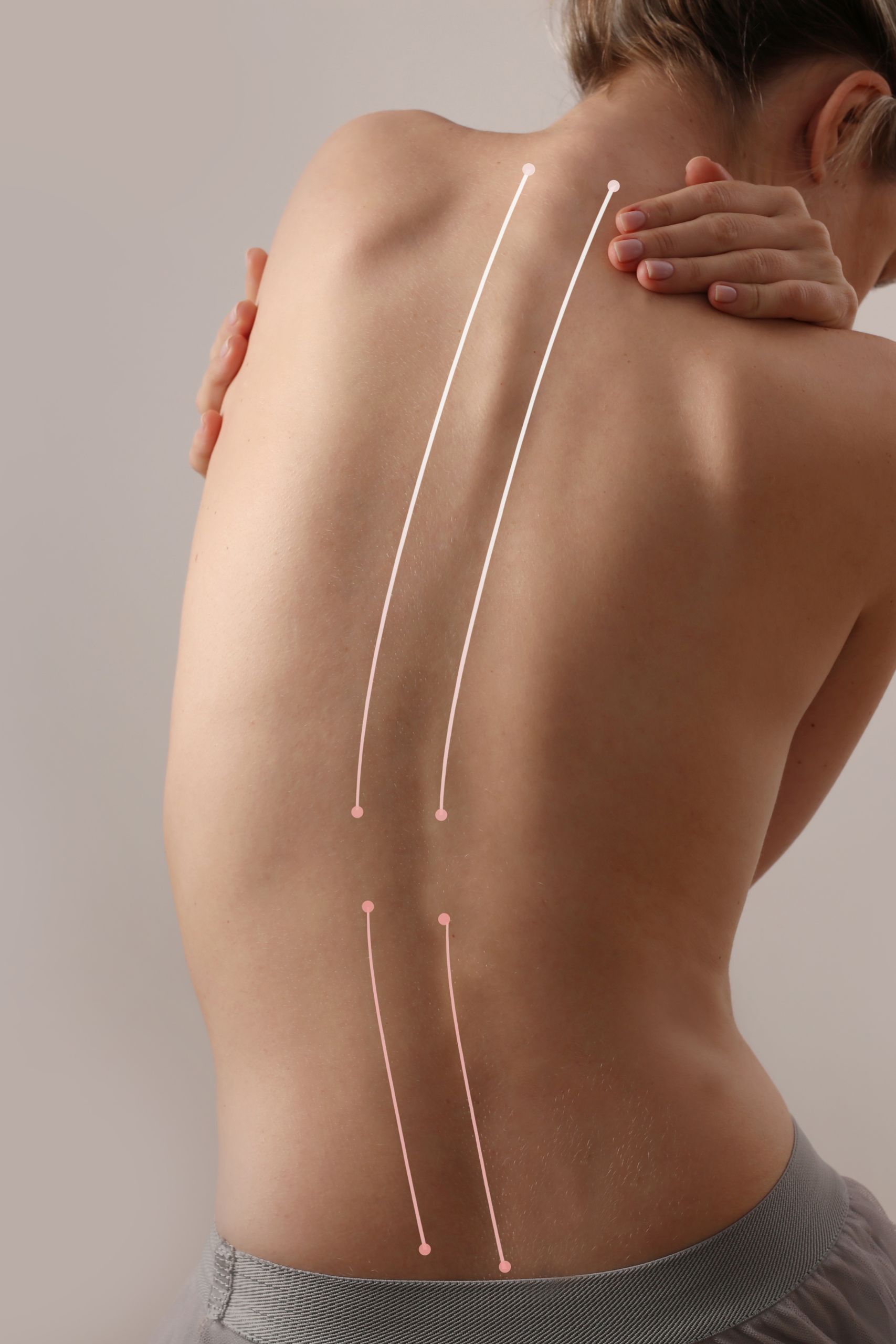
Physiotherapy is recommended as conservative treatment for scoliosis with curves greater than 15°, as well as adjunctive physiotherapy to bracing in cases
column, once mature, corrective surgery will be performed. The severity of the curve, the patient's age and other factors will be taken into consideration, such as the
Physical state.
It is very important to diagnose scoliosis early and begin physiotherapy treatment for scoliosis as soon as possible to slow its progression.
thus avoiding surgical treatment.
There are different techniques and approaches in physiotherapy whose main objective is to slow the progression of scoliosis with exercise methods where
include stretches and techniques that help to make muscles more flexible and stronger, mobilisation exercises to maintain, recover and improve
joint mobility, particularly in the spine, trunk, and shoulder girdle, and in turn, improve posture, neuromotor control, the
respiratory function and reduce pain.
Recommended exercises for scoliosis
- Global Postural Re-education (GPR)It consists of performing specific active postures, always maintaining bodily symmetry, with the aim of restructuring joint positions through progressive and global lengthening of the muscular chains.
- The Klapp MethodIt is based on the belief that scoliosis is a pathology of bipedalism. For this reason, it develops a work system in quadrupedalism and in
gating, negating the force of gravity on the spine, and using arm and leg positions and movements, ipsilateral and contralateral depending on how we want to correct the curvatures. - The Schroth methodthree-dimensional work including breathing, with the principles of “self-stretching” with axial elongation, “deflection” correcting lateral curves, “detorsion” correcting rotation, “facilitation” with external aids to facilitate proprioception and correction, and “stabilisation” using isometric tension at the end of the correction. In this way, the muscles are trained in a corrected position to fix the posture.
- Pool exerciseIn an aquatic environment, the tension in the postural muscles is reduced due to the elimination of the body's load, which improves the possibility of correct posture. It also improves the muscles responsible for thoracic breathing, reduces back pain, aids circulation, strengthens abdominal and spinal muscles, and improves psychomotor development and general quality of life.
- Pilates methodIt is shown as an ideal discipline that allows us to improve muscular imbalances and other factors involved along the spine by aligning, strengthening, and making it more flexible, maintaining good bodily functionality and preventing and protecting the spine against future problems caused by overexertion, poor posture, physical demands, or lack of training, and slowing down, as far as possible, the progression of scoliosis.
How we do it at Elite Pilates.
We will insist on working and developing a balance between the muscle chains and joints through controlled movements from the centre of our body, always seeking alignment and symmetry and placing great emphasis on the muscle force imbalances of the curvatures that scoliosis generates in the spine, where one side is stronger and another weaker, in order to achieve a balance between them.
On the other hand, the breathing work makes us work the intercostal muscles, which, as well as helping us to increase our lung capacity, gives us more amplitude and mobility to our rib cage, especially in the areas where, depending on the arrangement of the curves, we will have more rigidity, shortening or less strength or flexibility.
Manual therapy techniques
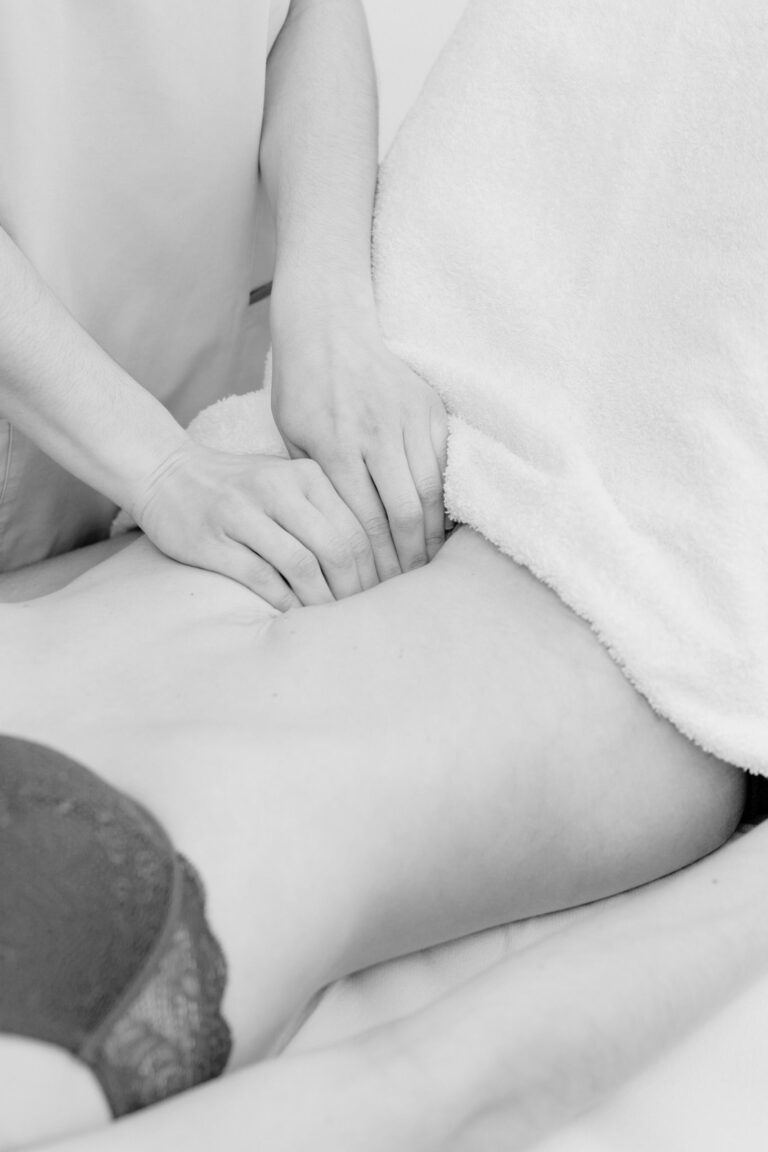
We use manual therapy on bone, muscle, nerve, and visceral tissues to balance and normalise bodily alterations, improve pain, increase joint range, balance muscle tone, improve blood circulation, and neuromuscular function.
- Myofascial inductionIt is a combination of sustained pressures, specific positioning and very gentle stretches. With this treatment, restrictions in the muscular fascia are eliminated, thus balancing altered bodily function.
- Trigger point treatment with Dry needling, Aiding in the re-establishment of muscle function.
Analytical vertebral joint mobilisations, in segments where hypomobilities are present. - Muscle energy techniques, of contraction-relaxation, to help inhibit muscle tone in shortened musculature and promote its stretching.
- Passive and post-isometric stretching On a stretcher, of all the musculature of the lower limbs, trunk, and pelvis.
- Kinesiology Tape Application assisting with articular mechanical correction, creating space between structures, releasing tension, improving blood circulation, and re-establishing neuromuscular function.
Benefits of physiotherapy for scoliosis
From a physiotherapy perspective, encompassing manual therapy on a plinth with exercises to improve or correct the curve as much as possible, and with the combined use of a brace, we can achieve the following benefits:
- With manual therapy and complementary equipment, we will work to prevent the formation of contractures and trigger points. We will mobilise joints, working the muscles, tendons, ligaments, and fascia, and help to balance muscular tensions to promote elasticity.
- We will increase spinal flexibility and help prevent spinal stiffness, improving cases of dorsal hyperkyphosis and lumbar hyperlordosis.
- We will achieve axial spinal elongation.
- We will strengthen the musculature of the core, which we call the “powerhouse or energy centre” in the Pilates method, encompassing the abdomen, lower back, pelvis, and hips.
- We will help to strengthen the musculature on the convex side and inhibit the hypertonic musculature on the concave side, thereby balancing and preventing the progression of the curves.
- To strengthen the global internal musculature and, above all, the deep musculature of the spine. Also the posterior musculature of the shoulder girdle, torso, and especially the respiratory musculature.
- We will improve the elasticity of musculature that is normally shortened, such as the quadratus lumborum, psoas iliacus, hamstrings, and the anterior musculature of the shoulder girdle.
- Improvement of vertebral mobility range, pelvis and hips.
- Improve body awareness
All of this previous work will help the person improve their posture, while also preventing future pain, thereby improving their quality of life. Therefore, now that you know all this information, if you are looking for specialists in physiotherapy in Madrid, We invite you to contact our team, we will help you find the solution that best meets your needs.
Tell us what you thought of this article, please rate it (1 TO 5 STARS).