
Connection between Ballet and Therapeutic Pilates
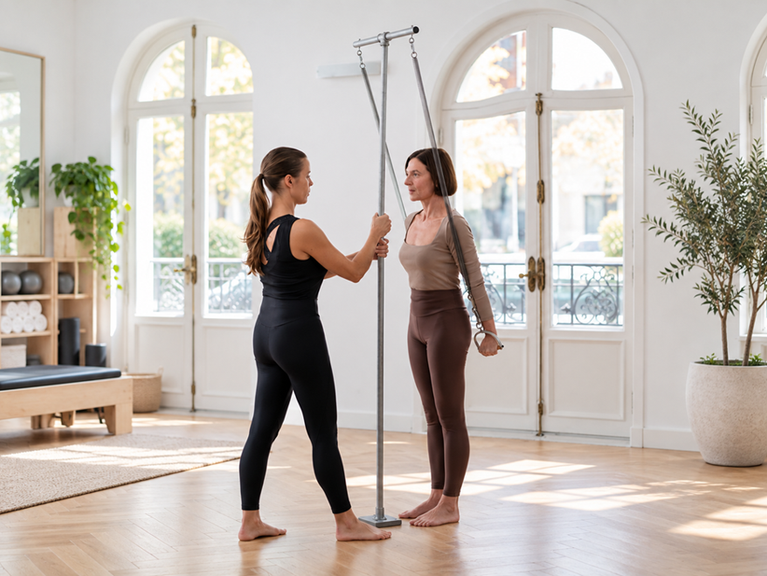
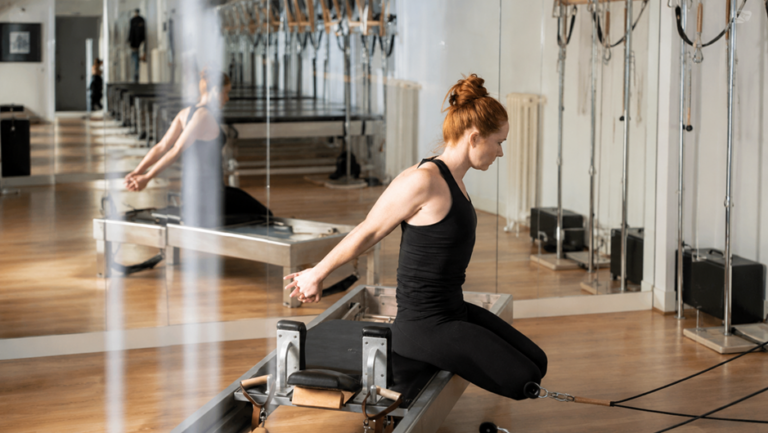
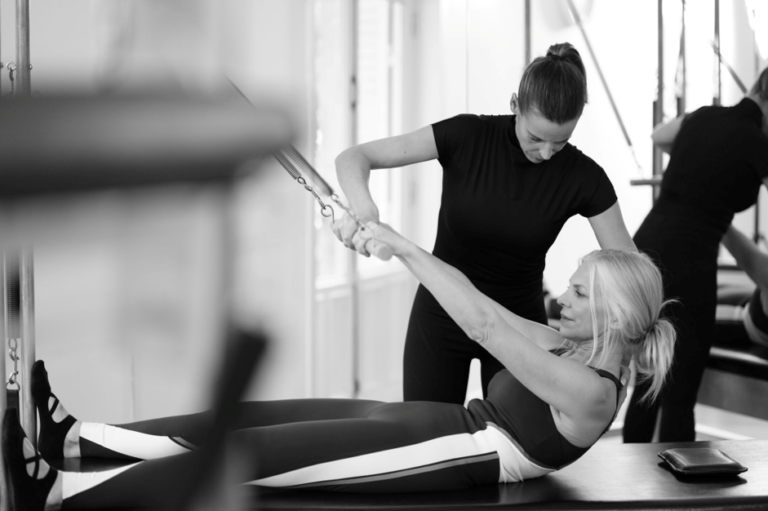
The Pilates method, or what became known as “Contrology”, was the technique that Joseph Pilates taught in his studio in New York. Being surrounded by dance schools and great figures such as the dancers of the New York Ballet, they were the ones who began to adopt his technique and spread it in the world of dance.
Pilates as training and rehabilitation for dancers
Initially, the method was born as a form of training and rehabilitation, but the dancers themselves saw it as a great way to improve their physical abilities and to rehabilitate a multitude of injuries caused by trauma or overuse in their activity.
The work on muscle chains and its importance in ballet
Pilates organises the work in muscle chains by moving the body in a functional and global way, something we also do when we dance naturally. We must try to correct the imbalance of these muscle chains that arises with the demands of this activity or with the demands of everyday life and that little by little could lead to an injury. The work of these muscle chains is very similar to ballet, making them lengthen and gain strength at the same time.
Personalisation of training according to the dancer's needs
Each dancer has certain physical qualities and a characteristic anatomy that will allow them to work according to their limitations. In many cases, a dancer gets to know his body when he is already training as a professional and injuries may have arisen due to having forced certain positions. It is very important that the young dancer has a previous base of knowledge about their body, analysing movements and forces to be able to work in a safe and preventive way. Introducing the Pilates method early in the development of a dancer becomes a very effective complement to achieve and multiply their potential.
The importance of the “Powerhouse” in ballet and Pilates
In ballet and dance, being artistic, visual and movement disciplines, we get to work the dynamic musculature, the one that moves, but sometimes we forget about the static, deep and stabilising musculature, which protects and gives support to hold certain positions or movement amplitudes. For this reason, it is important to work on one of the main concepts of Pilates that differentiates it from other sports or physical disciplines. This is the “Powerhouse” or energy centre, where the central strength is concentrated, giving lumbo-pelvic stability. This strength will be transferred to the rest of the limbs with a work of body awareness, with a fluid movement, stretching, toning with resistance and overall body harmony.
For a dancer, this is the most important thing, as it allows a complete work to be done, contemplating all these qualities and reaching a balance and alignment so necessary when having to make a multitude of turns, jumps, and variations in various positions with an axis that is moving and that has to be very clean, symmetrical and controlled.
Pilates in rehabilitation and injury prevention
Thanks to medicine and physiotherapy, nowadays we can rehabilitate an injury early and prepare it to demand the same level of activity as before, but often this last phase falls short or fails to rehabilitate completely, giving us long-term problems in the same area or in other areas further away from the injury due to decompensation. By working with the Pilates method and doing it early, even when the injury is in an acute period, we not only manage to get the injured part integrated and re-educated in the functionality of the body, but we will also ensure that the rest of the body does not become maladjusted or decompensated.
In addition, Pilates is not only focused on rehabilitation, but is also very good at prevention. In the world of dance, there are many injuries suffered by dancers throughout their professional career. In some cases, in order to achieve more flexibility, a characteristic quality of ballet to obtain large joint amplitudes, they reach a hyperlaxity that causes instability in the joints when accompanied by a lack of muscle strength that does not efficiently support the joint itself.
Pilates as an essential complement in the training of dancers
With Pilates we achieve greater control, muscular balance, with better joint response, without an extreme overload that leads to an excessive load or pressure on the joints for wanting to reach the maximum. For example, hyperextensions of the knees, so common and worrying because of the long-term problems it can cause, or excessive tibial rotation to get more “in dehors” or external rotation, something that has to be done from the hip and not from the knee. Pilates work makes us dissociate the forces necessary to stabilise one area while the other moves.
In this aspect, we can say that ballet and therapeutic pilates (or dance in general) are two disciplines that feed off each other and by working on them in a complementary way we acquire a freer, safer, more stable, wider and injury-free capacity for movement. In addition, the body awareness that can be achieved increases our ability to succeed not only on a professional level, as dancers, but also on a personal level and in the demands of our daily lives.
Tell us what you thought of this article, please rate it (1 TO 5 STARS).