
It is now considered advisable for most people to exercise before, during and after cancer treatment.
With the Pilates method, In particular, it is one of the most comprehensive disciplines, as it is low impact, it is one of the best options to improve the variables that will positively influence your health. With its practice we get the guarantee, for its safety and effectiveness, not only to restore and exercise the affected area, for example, in surgery, but to establish it as a method of conditioning the body globally, improving the physical condition and, in turn, performing a work of concentration and memory integrating body and mind, which reflects an improvement in the emotional aspect.
It will improve the quality of life and increase the level of energy and motivation, helping to cope with side effects and even prevent future recurrences.
Benefits of Pilates for Cancer Patients
The benefits of the Pilates method are innumerable, also in cancer processes, including different situations that may occur, such as surgeries or treatments with sequelae or side effects.
Objectives such as reducing pain, fatigue, anxiety and depression, improving range of motion, muscular strength and endurance, cardiopulmonary and vascular function and other visceral functions, strengthening the immune system, reducing physical and mental fatigue, improving sleep quality and self-esteem become priorities in order to regain a good quality of life in this process.
Thanks to it and the possibility of using it for all ages and personal physical characteristics, we have the best choice for rehabilitating body function and re-integrating the structures that have been affected by the surgical process and its global after-effects and working, in balance, the rest of the body, which is probably weak.
Correct breathing is essential for our health. The conscious and coordinated use of movement, as the method does, helps us to direct our attention and strength to the target area to be worked on, exercising our concentration and enhancing the control of each action of our body, favouring its alignment and posture.
Improved Flexibility and Muscular Strength
Exercise with some endurance and strength is essential for a cancer patient.
Many of the sequelae that may appear in the long term can improve with the practice of the method, realigning, strengthening weak areas, balancing and flexibilising structures that have restricted their mobility and eliminating incorrect postural patterns.
Exercises will help to build muscle strength, which will reduce fatigue and pain, often avoiding the use of drugs for pain relief.
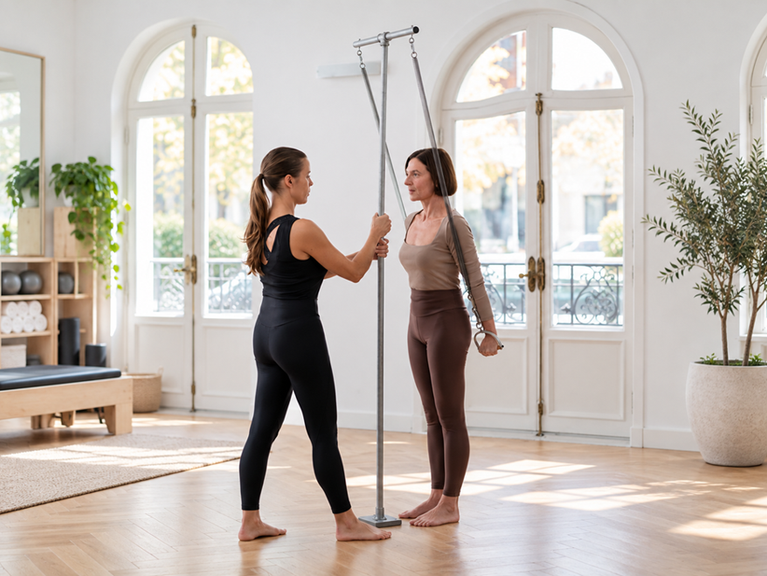
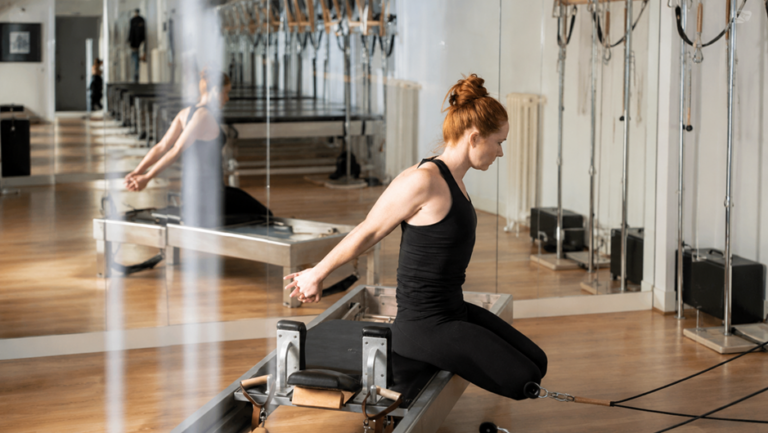
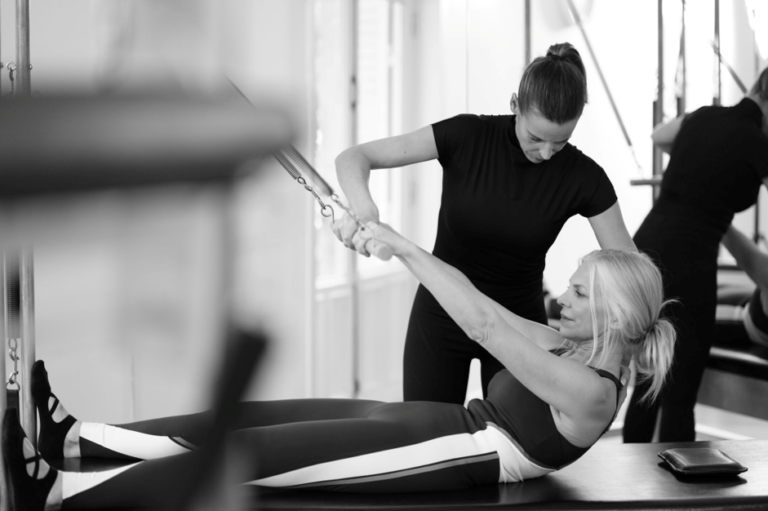
The combination of a wide variety of exercises either on the mat, alone with our own body, or with specific apparatus with resistors and springs, will work the strength of the whole body starting from the most important focus which will be the energy centre or “powerhouse" which will work towards the more distal parts of the body and limbs in a global and functional way.
Strengthening the internal musculature will give stability to the joints and will guarantee security in the function and strength of the external musculature, seeking a balance between the muscular chains that will help to maintain a correct posture that will allow better resistance to muscular fatigue, avoiding neck, back or other joint pain.
Improves the cardiovascular system
With the Pilates method we will not only achieve a strength work of the skeletal muscle, but also of the cardiac muscle, making it pump blood in a strong and constant way with each heartbeat. This, together with the conscious and controlled work of breathing, will allow more oxygen to enter the body by increasing its circulation.
Smaller blood vessels also benefit from the movement, with more blood reaching them, which increases oxygen uptake in all areas of the body and may even improve circulation in previously affected vessels.
With regular practice, we avoid further damage if at any time there is a blockage in the arterial circulation. By training the system, we will have more arterial channels that maintain the oxygen that nourishes the heart. In addition, the blood circulation will flow better, preventing the formation of clots.
Circulation, oxygenation and nutrient supply to our cells, tissues, muscles and organs will be improved, providing more vitality to our system, increasing energy and reducing fatigue in the performance of daily tasks.
Reducing Stress and Improving Emotional Well-being
There are multiple benefits on an emotional level, helping to reduce stress levels and having a positive impact on the state of mind.
The use of the focus of attention, the control of breathing technique and the search for the objectives to be achieved in the exercises require a high level of concentration, allowing us to be more aware of the body and its control. This control will help us to eliminate unnecessary muscle tension, lower stress levels, anxiety and reduce pain.
By working together with our concentration and the control of deep and conscious breathing, we will oxygenate the tissues and our body will release tension where it is not needed, relaxing the muscles and acting directly on physical, psychological and emotional stress, favouring rest, improving mood and relaxation.
Thus, We will get a great personal satisfaction, increasing confidence and self-esteem and seeing how the mind is able to control the body and not the other way around, which will help to feel better after each session.
Tailored Pilates: A Personalised Approach for Every Stage of Cancer
In general, and more specifically in cancer patients, it is important to establish an individualised work plan, taking into account their medical history, treatment and response to exercise.
Thanks to its methodology and its ability to adapt using multiple modifications, not only does it offer us the possibility of using it for all types of ages and personal physical characteristics but also, depending on the moment of the treatment process, the Pilates method allows us to work by adjusting the intensity and load of the training, in a gentle and progressive manner, being very meticulous with the level of fatigue or pain, and taking into account the after-effects or possible side effects of the treatment such as neurological, cardiovascular, musculoskeletal, gastrointestinal, endocrine, immunological. Aspects that would also be improved with Pilates training.
We are the best choice for rehabilitating body function and re-integrating the structures that have been affected by surgery and treating its after-effects, seeking a balance with the function of the rest of the body.
Frequently asked questions
When is it not possible to do Pilates?
In general, anyone can establish, without risk, an exercise routine of the method, adapting, modifying or eliminating any exercise that is required to take care of any aspect of health. It is advisable to have the help of a specialist such as a physiotherapist to make an individualised training plan and taking into account other pathologies, weaknesses, injuries or acute pain, or if there is pregnancy or any situation of medical rest.
What exercises should a person with cancer do?
Despite the importance of having the approval of the medical team that is attending the process, all the exercises of the method are designed to improve the patient's quality of life as they provide strength, endurance, flexibility, spinal mobility, joint stabilisation, alignment, coordination, balance and control. In addition, they are of low/moderate intensity and avoid overloads, impacts and excessive pressures.
How does exercise affect cancer?
Physical exercise helps to protect the body's systems from the side effects of therapies due to cardiotoxicity, controlling them better and helping to prevent other diseases, and even the risk of recurrence or the appearance of other types of cancer.
It is a great ally to improve your quality and stimulate your energy level to be able to go on with your daily life.
Tell us what you thought of this article, please rate it (1 TO 5 STARS).