
Physiotherapy for sciatica is essential to treat it. It is one of the best therapies not only to improve the symptoms, but also to prevent the onset of sciatica.
This discipline covers all aspects of treatment to improve injured tissues and structures and re-establish their function, giving movement, stability, strength and flexibility to the spine, pelvis and hips.
There are different actions and approaches for the execution of the different techniques and the one that best suits the patient's needs will always be applied, depending on the degree of pain, the physical characteristics, or the state of their structures and their general and specific symptomatology. Thus, first, we would focus the treatment on relieving pain and inflammation to then gain mobility and strength and improve function and prevent future relapses in order to perform daily and work tasks without any pain.
What is Sciatica?
Sciatica is a sharp or stabbing pain and electrical sensation along the path of the sciatic nerve, which extends from the lower back, buttocks and back of the leg and may leave a tingling sensation, numbness or loss of strength on the affected side, from the buttock to the foot. It is the longest nerve in the body.
It is caused by compression, irritability, inflammation or deterioration of the sciatic nerve in any of its spinal sessions in the spinal column L4, L5 and S1 either by a prolapse or a hernia in any of the intervertebral discs, causing pain.
In older people it may be due to degenerative changes, such as osteoarthritis, vertebral displacement or stenosis of the spinal canal.
Sometimes a “false sciatica” may be evidenced by muscle contracture that generates compression in the sciatic nerve when performing activities or positions, generating compression in the buttock and producing what we call “pyramidal syndrome”. This episode generates pain very similar to sciatica, but there is no compression at lumbar level.
A set of symptoms are usually present, such as:
- Neuropathic (electrical) pain, radiating from the lumbosacral region, buttocks, and down to the leg and foot.
- Inability to flex the knee or foot correctly (in very acute episodes).
- Gait disturbance.
- Tingling or numbness and burning sensation in the legs.
- Muscle weakness.
- Altered sensation and perception of heat and cold
- Reflex impairment.
- Lower limb oedema.
Importance of Physiotherapy in the Treatment of Sciatica
Physiotherapy is essential for the treatment of sciatica. As well as helping to improve symptoms, it also provides mobility, flexibility, stability and strength, thus improving body function and state of health, allowing us to return to our daily activities and work without any pain. And, once any acute episode has been resolved, it helps to prevent future relapses.
Physiotherapy for sciatica is aimed at achieving several objectives:
- To reduce muscle spasm and relieve pain in the lower back, buttocks, thighs and legs.
- Work on the mobility and release of the sciatic nerve along its entire length based on the structures that compromise its integrity.
- Restore lumbar spine and sacroiliac joint function, mobility of vertebrae, pelvis and hips by restoring functional movement patterns without pain.
- Establish and encourage better posture to protect the lower back and overall body position.
- Prevent future pain flares and reduce fear associated with movement.
Physiotherapy Techniques to Relieve Sciatic Pain
Treatment for sciatica will depend on the degree of the patient's pain and its cause, but there are a number of techniques adapted to each situation and process.
The most important thing is to carry out a good anamnesis and physiotherapeutic assessment and, from there, to choose the best treatment for the patient.
- Diathermyproduces a thermal effect in deep layers, increasing metabolism and relieving inflammation. Highly recommended in acute phases of pain.
- Electrotherapy and neuromodulation of painby applying a current along the sciatic nerve that modulates the tingling sensation or weakness of the affected area with a powerful analgesic and anti-inflammatory effect.
- Manual joint mobilisation techniqueslumbar, pelvic and hip level, to promote pain relief or restore joint movement and prevent stiffness.
- Dry needlingUsing a needle, we perform this technique to release trigger points in the muscle tissue, reducing pain and improving its function.
- Muscle energy techniqueis a form of manual therapy in which the patient and therapist perform gentle muscle contractions and relaxations incorporating movement of joints involved in the dysfunction. This technique can help reduce pain and restore function.
- Myofascial release and soft tissue mobilisationWe treat fascial restrictions by reducing muscle tension or spasm.
- Neurodynamics or neural mobilisationWith the mobilisation of the sciatic nerve we manage to improve the free gliding along its entire length, relieving the sensation of pain and tingling.
- Mechanical tractionjoint decompression, reducing pressure between vertebral discs, relieving their pain.
- Strengthening of weak muscles and stretching of stiff musclesWe must take into account the strengthening work of all the deep musculature of the abdomen, trunk, lumbar, pelvis and hips, based on achieving a balance between the muscle chains with a correct alignment of the joint structures.
- Gait trainingThe patient's walking technique is analysed and retrained to use the correct gait patterns.
- Postural and lifestyle modifications for sciaticaThe correct, ergonomic sitting, standing and walking posture is essential to treat and prevent sciatica. It is also important to follow daily routines, such as following ergonomically safe lifting techniques and adopting good sleeping postures.
Stretching Exercises for Sciatica
It is advisable to first introduce mobility and sliding exercises for the sciatic nerve itself to improve its sliding (Neurodynamics) and then, when the inflammation and symptoms have gone down, gradually introduce stretching exercises.
Physiotherapy exercises for sciatica should be gentle and controlled. They are designed to improve flexibility and reduce muscle stiffness helping to relieve pressure on the sciatic nerve and reduce pain.
These stretches, for example, on hamstring muscles, gluteal and pyramidal muscles, and flexor muscles (psoas iliacus) will work on the muscle areas so that the lower back and pelvis release tension, always doing it for both hips.
Muscle Strengthening and its Role in Physiotherapy
Strengthening the muscles of the back, legs and core (internal musculature of the abdomen, lumbar, hips) is essential for the management of sciatica, which is weakened by pain.
Muscle strengthening exercises, including isometric and resistance exercises with weights appropriate to the person's condition, will help to stabilise the spine and reduce the load on the sciatic nerve.
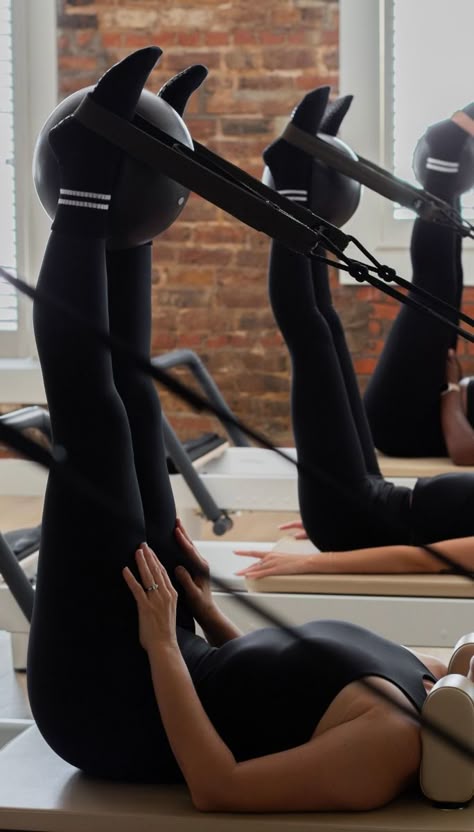
In physiotherapy for sciatica it is important to use as training disciplines that help us to improve our symptomatology at the same time that they work the rest of the body, integrating the injured structures in harmony and balance, with good alignment and coordination of muscle chains. One of these is the Pilates method, which, within physiotherapy, is shown to be a highly effective tool due to its safety and work. With its set of resistances, we will achieve much more stable joints and stronger and more elongated muscles. It will give us more power, more resistance and even reaction speed, helping to prevent future relapses.
Tips for Maintaining Spinal Health
To maintain good spinal health, it is advisable to add a low-impact, aerobic physical exercise routine to our daily routine. For example, walking for 30 minutes or swimming and pool exercise, combined with back, hamstring, gluteal, piriformis and hip flexor stretches.
Do some activity that helps to strengthen the abdominal girdle and deep muscles. This will be our main protective barrier. In this respect, Pilates is considered one of the best disciplines to analytically address these concepts, not only to safely recover the affected body functions, but also to prevent relapse.
By strengthening the internal musculature that joins and stabilises our vertebrae, we will be able to maintain a correct posture that will allow us to better resist muscle fatigue, avoiding neck, back and other joint pain.
It will also help us to improve our posture at work, and the way we bend down and pick up objects without putting our spine at risk.
It's good to avoid movements that involve spinal flexion, bending or twisting that could make sciatica pain worse. The same goes for heavy lifting and high-impact activities, such as running on a hard surface.
Frequently Asked Questions on Physiotherapy and Sciatica
- What therapy is good for the sciatic nerve?
The therapy that, in the long term, will reduce symptoms and maintain functionality will be physical exercise, strengthening the internal muscles of the spine, abdomen and hips, stretching muscles that are under tension and performing a non-impact aerobic exercise routine. We can also combine it with stretcher therapy to treat tense muscles and improve blood circulation and the sliding of the sciatic nerve.
- How many physiotherapy sessions for sciatica?
It is necessary to take into account the phase or period in which the patient is, the degree of pain, disability, immobility or joint blockage, as well as the structures that are affected. According to this, short and long term objectives will be set, which will determine the sessions to be carried out.
- How to decompress the sciatic nerve?
In general, physiotherapy is used to improve pain and function, including techniques, complementary equipment to reduce inflammation of compromised structures, and manual therapy to reduce soft tissue tension, such as myofascial release, dry needling, massage, vertebral mobilisations or tractions to free up space between joints, as well as including neurodynamic techniques.
In more severe or disabling cases, surgery may be necessary.
Tell us what you thought of this article, please rate it (1 TO 5 STARS).