
Active ageing is not a fad, it is a necessity. And in the heart of Barrio Salamanca (Madrid), where wellness and body care have found a place to be exercised, Pilates is positioned as one of the most effective tools to preserve health, autonomy and vitality in the elderly. If you are looking for a centre specialised in Pilates in Barrio Salamanca, stay until the end.
Introduction
The World Health Organisation (WHO) defines active ageing as the process of optimising opportunities for health, participation and security in order to improve quality of life as people age. In this context, moderate, safe and well-directed physical exercise, such as the Pilates we offer at Elite Pilates, plays a crucial role.
As we age, muscles lose tone, joints become less mobile and balance tends to deteriorate. However, it is not ageing per se that causes dependence or loss of function, but prolonged inactivity. This is where Pilates comes in.
The impact of ageing on the body
From the age of 60 onwards, certain physiological processes that directly affect quality of life are accentuated:
-
Sarcopeniamuscle mass loss at a rate of between 1% and 2% per year after the age of 50.
-
Osteopenia and osteoporosisBone mineral density decrease, especially in postmenopausal women.
-
Diminished equilibriumdue to reduced proprioceptive ability and weakness of the core muscles.
-
Reduced cardiovascular and respiratory capacity.
-
Joint stiffness and reduced flexibility.
These conditions, although common, are not inevitable. Studies show that regular training of adapted exercise can slow down, prevent or even reverse some of these effects.
What makes Pilates for seniors unique?
The Pilates method, developed by Joseph Pilates at the beginning of the 20th century, was not conceived as an exclusively youthful or athletic discipline. On the contrary, its creator defined it as an “art of control” that sought to restore harmony between body and mind through conscious movement.
Among the characteristics that make Pilates an ideal option for older people are the following:
-
Low joint impactideal for people with osteoarthritis, osteoporosis or chronic pain.
-
Focus on breathingimproves cellular oxygenation and regulates the nervous system.
-
Core strengtheningessential to maintain posture, stability and prevent falls.
-
Functional and personalised workEach exercise can be adapted to individual constraints.
-
Mind-body connectionPsychological and cognitive benefits through mindfulness.
Concrete benefits of Pilates in old age
Numerous studies have documented the positive effects of Pilates on the health of older adults. Some of the most relevant are summarised below:
| Benefit | Scientific Evidence |
|---|---|
| Improving balance and preventing falls | Bird et al. (2011) study: reduced risk of falls by up to 35%. |
| Increased muscle strength | University of Miami (2014): improvements in lower and upper body strength. |
| Reduction of low back pain | Journal of Bodywork & Movement Therapies (2016): decrease in chronic pain in 8 weeks. |
| Improved flexibility | Clinical Interventions in Aging (2020): significant increase in joint mobility. |
| Emotional regulation and stress reduction | Research published in Frontiers in Psychology: positive effects on mood and anxiety. |
Pilates in the heart of Barrio Salamanca: a local opportunity for a global change
In our centre of the Salamanca neighbourhood, where integral wellbeing and personalised attention are promoted, practising Pilates offers an advantage: access to highly specialised qualified professionals such as all the members of our team.
Elite Pilates brings added value to the sector by offering for all our seniors (and not so seniors):
-
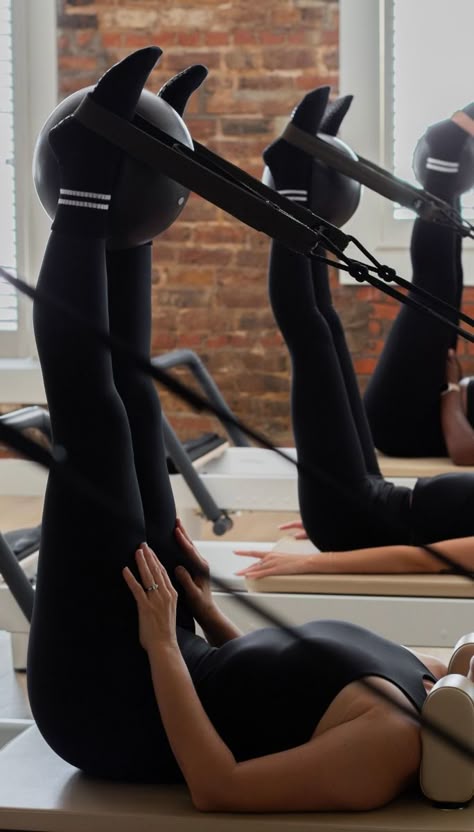
Classical and contemporary Pilates equipment adapted to the elderly.
-
Small group or individual sessions.
-
Functional pre-assessments and ongoing monitoring.
-
Sessions combined with physiotherapy or postural therapy, when necessary.
The quiet, accessible, urban environment also facilitates consistency, an essential element in any exercise training for seniors.
Focus on fall prevention
Falls are the leading cause of serious injury and loss of independence in the over 65s. The Ministry of Health estimates that a 30% of seniors suffer at least one fall per year, and that these figures increase with age.
Our long history in the field of Pilates teaches us that this wonderful discipline acts on the main risk factors:
-
Improves dynamic and static balance.
-
Strengthens stabiliser muscles.
-
It works on neuromuscular coordination.
-
It enhances body awareness and reaction to external stimuli.
Implementing a Pilates programme aimed at preventing falls can reduce the risk of accidents in the home or on public roads by up to 40%, especially for people living alone.
How do we adapt a Pilates class for seniors?
Contrary to what some believe, Pilates for seniors is not simply about “slowing down”. It is about designing intelligent, functional and safe classes.
Key elements of a tailored session:
-
Exercises on a mat with lumbar support to avoid overloading the lower back.
-
Use of accessories such as elastic bands, chairs or balls, to adapt resistance and stability.
-
Slow and controlled movements, avoiding impacts or hyperextensions.
-
Progressive teaching, respecting each person's time.
-
Pelvic floor integration, especially relevant in women.
The goal is not technical perfection, but functionality: to be able to dress, walk safely, and maintain independence in the home, among others.
Comparison: Pilates vs. other methods in old age
| Discipline | Joint impact | Improved balance | Respiratory approach | Personalisation | Risk of injury |
|---|---|---|---|---|---|
| Pilates | Under | High | High | High | Very low |
| Traditional Yoga | Moderate | Medium | Medium | Variable | Medium |
| Gentle gymnastics | Under | Under | Under | Media | Under |
| Daily walk | Under | Under | Under | Baja | Under |
This table shows why Pilates has established itself as the activity of choice for health professionals and older people, risk-free and with a high rate of improvement in physical fitness.
Recommendations for getting started
Before starting a Pilates training for older people, it is advisable to follow these steps:
-
Consult a doctorespecially in case of chronic diseases or a history of surgery.
-
Conduct an initial functional assessmentto identify limitations and adapt exercises.
-
Find a specialised centrewith proven experience in working with the elderly.
-
Start progressivelyIt's not about performance, it's about consistency.
-
Combine with other healthy habitsThe following are the key elements: good nutrition, rest, hydration and an active social life.
Live longer and better with Elite Pilates
Ageing should not be conceived as a phase of decline, but as a stage of transformation. Pilates, in this sense, becomes a powerful tool to redefine longevity with movement, autonomy and body awareness.
Practice Pilates in Barrio Salamanca is, in many ways, an act of responsibility towards oneself. It is an investment in health, independence and quality of life. Because turning a year older should not mean giving up on your body, but rather reconciling yourself with it by relying on a team that is specialised and passionate in its field.
Tell us what you thought of this article, please rate it (1 TO 5 STARS).